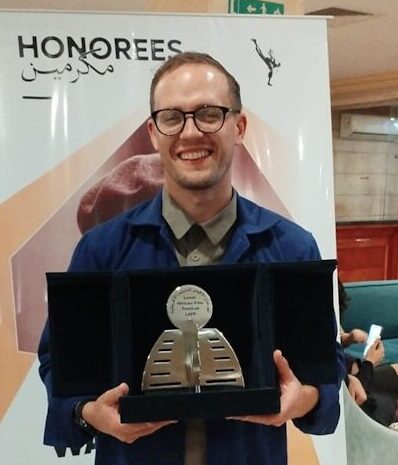
Michael James: Director of God's Work


South African Film ‘God’s Work’ Awarded Prestigious Prize at Luxor African Film Festival
The South African feature film God’s Work, directed by Michael James and produced by Sithabile Mkhize, was awarded the prestigious Radwan El Kashef Prize for Best Film Addressing an African Issue (Silver Mask of Tutankhamun) at the Luxor African Film Festival in Egypt last week.
“The Radwan El Kashef Prize for the Best Film Addressing an African Issue is not granted annually, but only when the High Committee decides that a particular film deserves this special honour, marking it as a distinction reserved for truly exceptional works that embody both artistic excellence and deep engagement with African realities,” says Festival Director Ms Azza El Husseiny.
The prize is named after Egypt’s pioneering independent filmmaker Radwan El Kashef (1952–2002) and symbolises cinema that elevates marginalised voices with empathy and poetic depth. The film was honoured for “its powerful artistic vision and its sincere exploration of African identity and collective struggle.”

The award was presented to the director, Michael James, by Dr Hossam El-Mandouh El-Husseini, Egyptian Member of Parliament, in recognition of the enduring cultural ties between Egypt and Africa and the festival’s role as a platform for creative dialogue across the continent.
Reflecting on the honour, director Michael James said, “Receiving this award on behalf of the film and all involved is deeply humbling. This award affirms the importance of telling African stories with honesty and empathy, and I hope God’s Work continues to contribute to the ongoing dialogue around affirming the humanity of the homeless community.”
Sithabile Mkhize commented, “This award is especially important because it acknowledges one of the central intentions of the film, which is to use the power of cinema to build bridges across humanity.”
“This recognition is a powerful validation of the collaborative effort behind God’s Work,” says executive producer Toni Monty. “It highlights the strength of African filmmaking and the importance of creating platforms where our stories can resonate globally. We are proud to see the film stand alongside works that embody both artistic excellence and social relevance.”
The film is supported by the Durban Film Office, KZN Tourism and Film Authority, and the National Film and Video Foundation and co-produced with Amafrika Films and Mojo Entertainment.
About God’s Work
Michael James’s debut feature is the kind of film that sits with you long after the lights come up: uncomfortable, beautifully shot, and unafraid to be difficult. Set in a crumbling inner-city Durban building that offers fragile sanctuary to a group of unhoused men bound by quiet loyalty, UKZN, God’s Work refuses the familiar comforts of social realism. Instead, it blends documentary textures, staged encounters, archival material and symbolic imagery in Gauteng Film, drifting between waking life and the dream states of its central figure, Simphiwe.
Jared Hinde’s cinematography is the quiet triumph here. He finds a tactile, almost sacred dignity in peeling walls and street corners, while George Acogny’s score carries the emotional freight when language falls short. The ensemble Thobani Nzuza, Mbulelo Radebe, Omega Ncube, Siya Xaba, Zenzo Msomi and Nduduzo Kholwa commit fully, giving us men who are neither saints nor case studies.
The politics bite. A satirical Ubuntu Freedom Fighters activist and a People’s Alliance Movement councillor handing out chips on Mandela Day skewer the performative gestures of South African political life, the Durban Film Mart, and the police violence lands with terrifying familiarity.
Yet the film isn’t without its blind spots. Women exist largely at the margins as trauma, as delirium, and as absence. The Durban Film Mart and the surrealism occasionally overtake the emotional thread it’s trying to protect. At 127 minutes, it asks a lot of its audience.
Still, this is brave, necessary cinema. As Dr Raymond Perrier notes, the film should prick the conscience of anyone who thinks they can solve homelessness without actually listening to homeless people. God’s Work doesn’t beg for empathy. It demands we look and keep looking.