Ameirah Hope Mouton

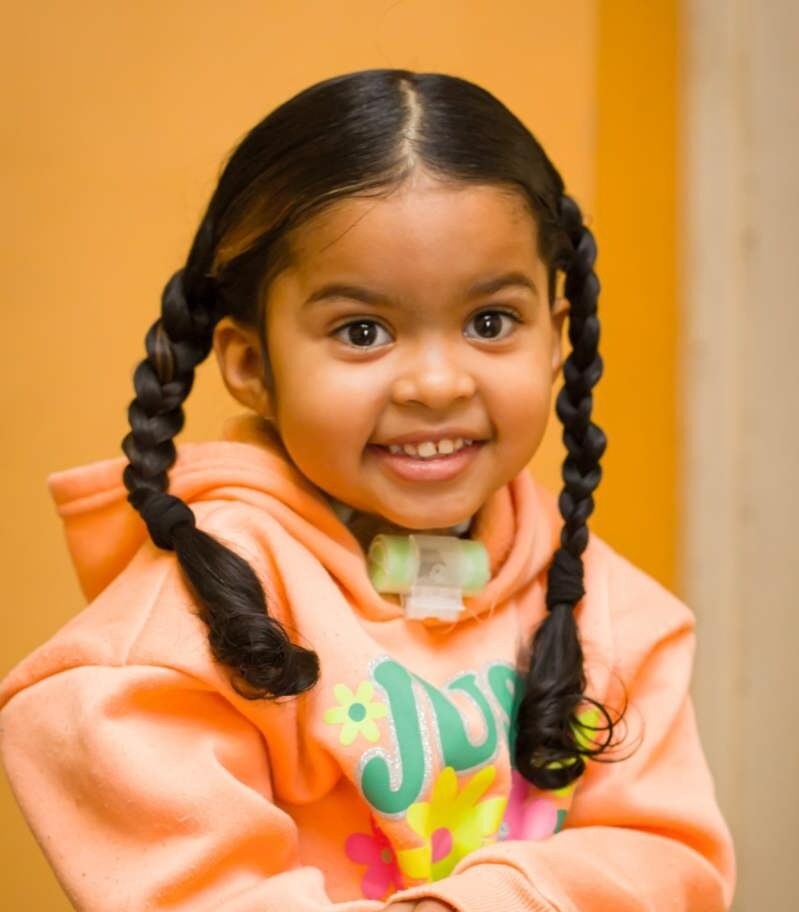
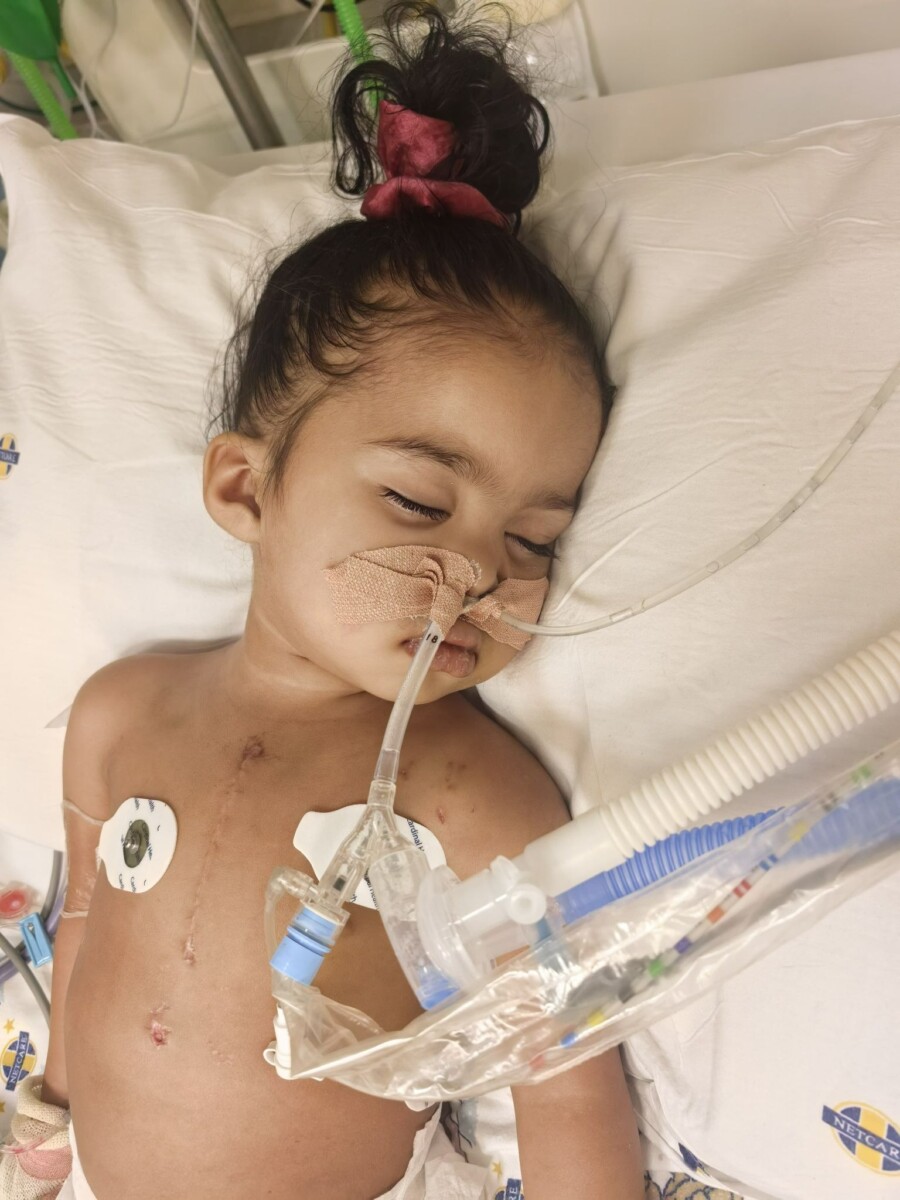
Kimberley, Northern Cape — Three-year-old Jude Ameirah Hope Mouton was learning to speak when complications following successful open-heart surgery left her airway severely narrowed and required a lifesaving tracheostomy.
Nearly two years later, Jude can breathe safely through the tracheostomy, but she cannot use her voice. She forms words silently, points and uses gestures that her family has learned to understand. She plays alongside her siblings and joins in their games, but sometimes struggles when she cannot make herself be understood.
Despite a childhood shaped by specialist appointments, surgery and daily medical care, Jude is a joyful and active little girl who wakes up smiling most days.

“She has been through things that I think many adults wouldn’t cope with,” her father, Vaughan Mouton, says. “But above all of that, she’s our daughter. She’s not just a person with a special medical need. She’s our Jude.”
Her family is now raising R50,000 to travel from Kimberley to Cape Town for specialised airway assessments beginning in September, followed by complex reconstructive surgery expected in October.
The treatment aims to improve Jude’s airway and could give her parents something they have spent two years waiting for: hearing the sound of their daughter’s voice.
“We are doing all of this just for her,” her parents say, “so that she can have her voice back and we can hear her scream, shout and be naughty like she is supposed to be at three years old.”
A BackaBuddy campaign, Help Jude Hope Find Her Voice, has been launched by Lazlo Mehl to help cover travel, accommodation, transport, medical shortfalls and daily living expenses linked to Jude’s treatment.
The Moment Everything Changed
Jude’s medical journey began before she was born. During a 4D scan in the final weeks of Fahzlin Mouton’s pregnancy, the radiologist became unusually quiet.
“I was wondering what was happening because she had been silent for such a long time,” Fahzlin recalls. “Then she said something I will never forget: ‘Something does not look right with her heart.’ I started crying.”
At 33 weeks pregnant, Fahzlin and Vaughan travelled to Cape Town to see a paediatric cardiologist. Doctors initially identified one hole in Jude’s heart and believed it might close naturally after birth.
Further scans later revealed that Jude had both an Atrial Septal Defect and a Ventricular Septal Defect. Neither was closing, and she would eventually need open-heart surgery.
From six months old, Jude began travelling between Kimberley, Bloemfontein and Johannesburg for specialist appointments and monitoring. She was also diagnosed with pulmonary hypertension, adding another serious concern for her family.
A Successful Heart Operation, Came With a New Challenge
Before doctors could operate on Jude’s heart, they discovered that her airway was far narrower than expected.
Medical teams first experienced difficulty intubating her during an angiogram. When she was eventually strong enough for open-heart surgery in October 2024, doctors again struggled to place a breathing tube.
Her airway had to be dilated and treated with a laser, and doctors ultimately used a tube intended for a newborn baby.
The heart operation was successful, repairing both holes. After weeks in intensive care and the paediatric ward, Jude’s family began preparing to return home.
Then, on the night before they were due to leave, Jude’s heart rate suddenly increased. She began sweating and struggled to breathe. Doctors took her back to the theatre in the early hours of the morning.
“The moment she started struggling to breathe on the eve of us going home was the scariest,” Vaughan says. “We were then told the only option would be a tracheostomy.”
For Fahzlin, the decision was deeply emotional.
“I was against it because I was afraid she would lose her voice,” she says. “But there was no other way. It was the only way she would be able to breathe.”
The tracheostomy allowed Jude to breathe safely. But after returning home, the voice her family hoped to hear did not return.
Learning to Communicate in Her Own Way
Jude had already started learning to speak before the tracheostomy. Today, her parents can see her forming words, but they cannot hear her voice.
“They would ask us, ‘Is Jude speaking?’” Fahzlin recalls. “And I would say, ‘She is speaking, but there is no sound coming out.’”
Further procedures and scans revealed that the airway beneath Jude’s vocal cords is severely narrowed, preventing enough air from reaching the vocal cords to produce sound.
Jude has developed her own way of communicating. She forms words silently, points and uses gestures her family understands. She has also learned to alert her parents when her tracheostomy filter needs attention or when she needs suctioning.
“She has figured out how, and we have learned how,” Vaughan says.
Caring for the tracheostomy is now part of the family’s daily routine. Her parents clean and change it regularly and use a suction machine to clear secretions from her airway several times a day.
Her medical needs have also delayed her opportunity to attend school, as she requires someone trained to manage the tracheostomy and respond quickly if she experiences breathing difficulties.
Vaughan has become Jude’s full-time caregiver in practice, while Fahzlin continues working to ensure that their daughter remains on medical aid.
The family hopes to see Jude attend school, make friends and experience childhood with fewer medical limitations.
“We can’t wait for her to go to school when she is five or six and live as normal a life as possible,” her parents say. “We just want her to be everything she can be.”
The Next Journey Begins in Cape Town
Jude has now been referred to a specialist airway reconstruction team in Cape Town.
The first stage is expected to begin in the first week of September, when doctors will perform a bronchoscopy and further tests to determine whether she is ready for surgery.
The reconstruction is expected to take place during the first week of October. Doctors will aim to treat the narrowing and improve Jude’s airway, although her parents have been advised that the full process may require three or more procedures over the next year or two.
Even if the tracheostomy cannot be removed immediately, improving the airway may allow air to reach Jude’s vocal cords again.
For her family, that possibility means everything.
“To hear her laugh and cry with her siblings, something we haven’t experienced for almost two years, would be the best thing ever,” they say. “Even if the tracheostomy doesn’t come out immediately, we are mostly looking forward to hearing her voice again.”
The Costs Beyond Medical Aid
Jude’s medical aid covers most major procedures, but the family continues to receive bills for certain consultations, blood tests, physiotherapy and other medical shortfalls. One upcoming virtual consultation with the Cape Town team is expected to cost close to R4,000.
The family must also cover travel from Kimberley to Cape Town, accommodation near the hospital, local transport and daily living expenses during an anticipated stay of two to three weeks.
They do not yet know whether Jude will be medically cleared for the approximately 10-hour drive home after surgery or whether she may need to fly. Both of the family’s vehicles became irreparable during the past year, leaving them dependent on borrowed or rented transport.
“Going to Johannesburg was something we could manage because we had family there who gave us a place to stay,” Vaughan says. “Cape Town is more than twice as far, and during the bigger operation we want to be close to her.”
The BackaBuddy campaign aims to ease these practical pressures so that Jude’s parents can focus on supporting her through the next stage of treatment.
The family says the donations, prayers and messages already received have made the journey feel less lonely.
“Words cannot express how thankful we are for every cent, every WhatsApp, every prayer and everything people have done to make our little Jude’s life easier,” Vaughan says.
Now, the family is asking the public to help Jude reach the specialist care that could improve her airway and, they hope, allow her voice to be heard again.
To support Jude Ameirah Hope Mouton’s journey, visit the Help Jude Hope Find Her Voice campaign on BackaBuddy:
https://www.backabuddy.co.za/campaign/help-jude-hope-find-her-voice
Watch Jude’s Story
A recently released video from Jude’s parents gives a personal look at her journey, from her early diagnosis to the moment her family realised they could no longer hear her voice, and their hope of hearing it again.