The first-ever inclusive safari walk happened in Dinokeng Game Reserve

Dinokeng. Where the road ran out, and the walk carried on.
Kwalata Game Lodge in the Dinokeng Game Reserve, GAUTENG — On 16 August 2026, Normie Eckard, Luthando Kekana and Thomas Ngwana went on a guided walking safari at Kwalata Game Lodge in the Dinokeng Game Reserve.
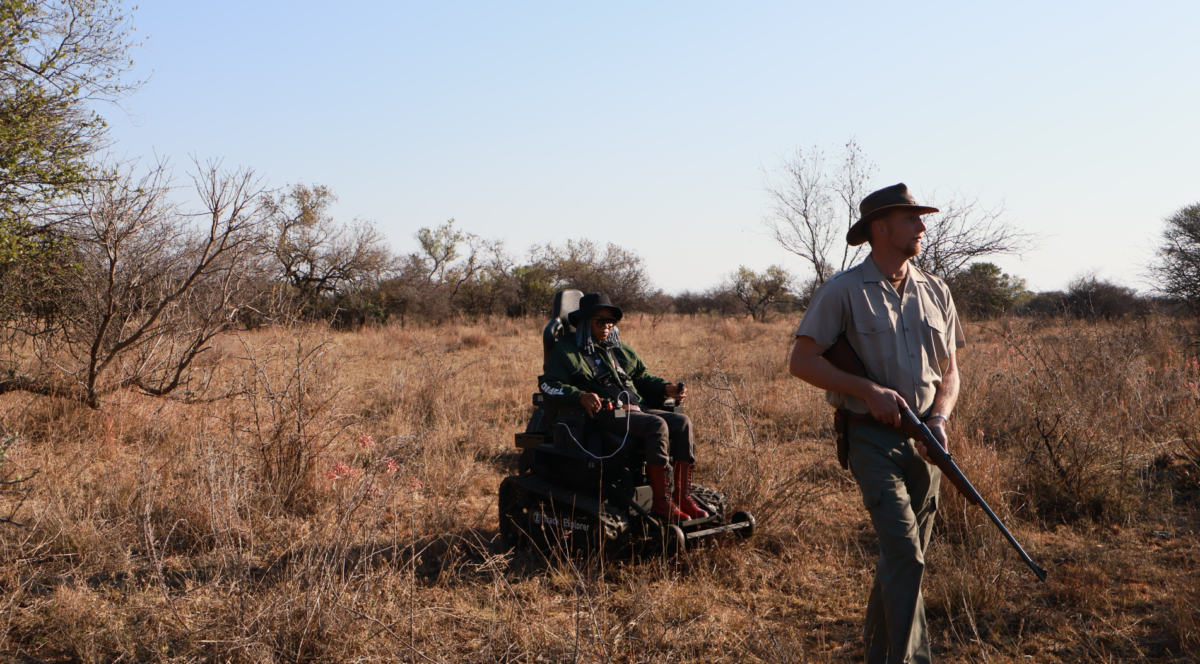
All three are wheelchair users. None of them was in a vehicle.
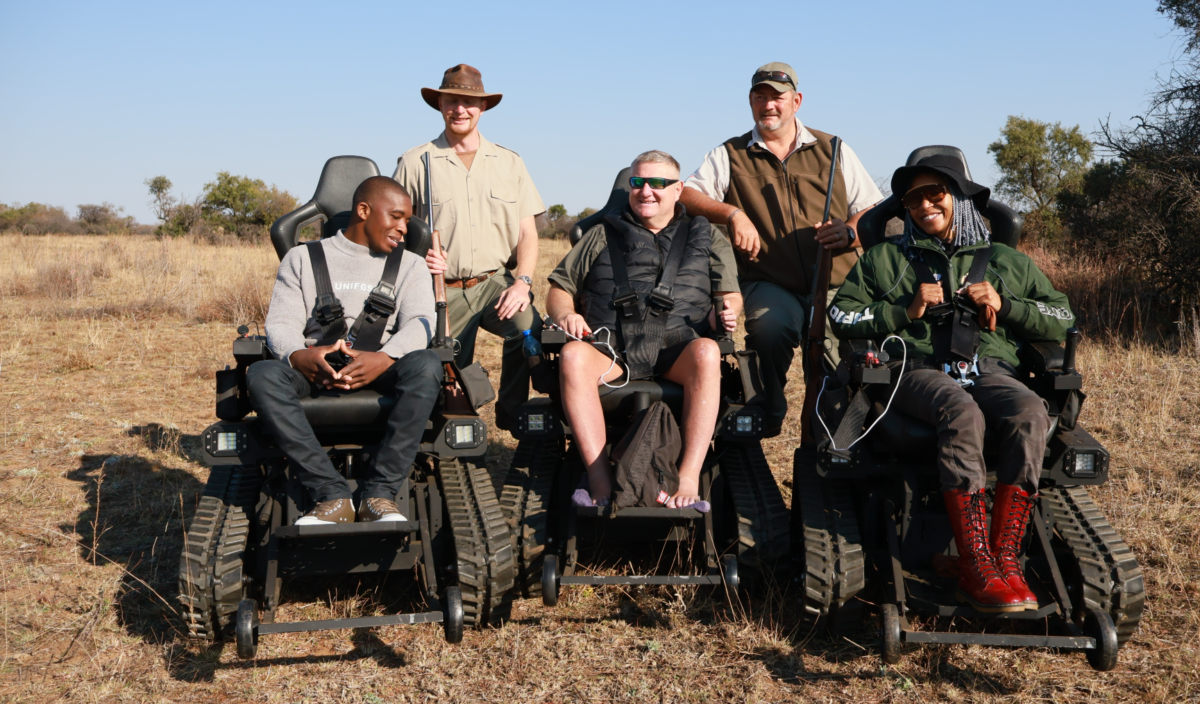
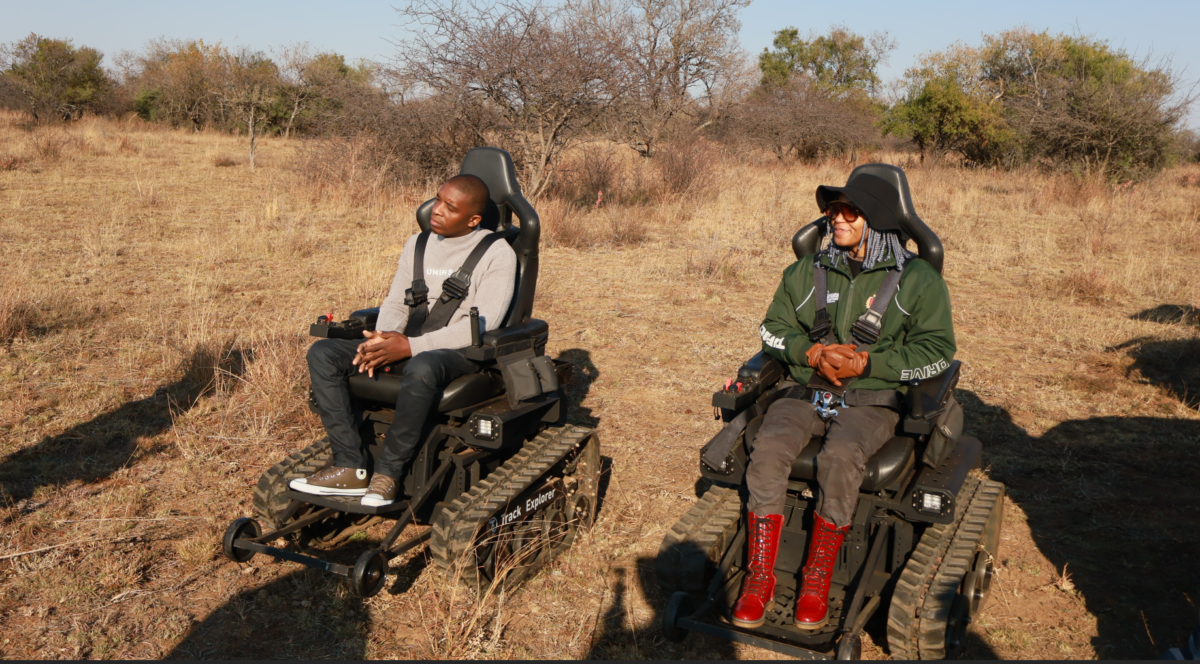
They crossed sand, grass, rutted game paths and open veld, and stopped close enough to a giraffe to look at it properly. Two armed field guides walked with them, picking the route on the day as they would for any group. As far as everyone involved is aware, this is the first walking safari of its kind in Dinokeng, and quite possibly in South Africa.

Dinokeng is Gauteng’s only Big 5 reserve: 20 000 hectares of free-roaming lion, elephant, rhino, buffalo and leopard, thirty minutes from Pretoria.
In May 2012, at Tourism Indaba in Durban, the National Department of Tourism and tourism role players signed the Universal Accessibility Declaration, committing South Africa to becoming a universally accessible destination. Fourteen years later, three wheelchair users went to find out what it meant on the ground.
“You don’t have that luck”
For Luthando Kekana, the difference was leaving the vehicle behind.
“I just actually loved being in the wild,” she said afterwards. “It kind of makes you feel vulnerable, but the mere fact that I could get into it, move around, interact closely with the animals, nature and all that — that was top tier. Instead of always being in the car, where people sometimes get out and you don’t have that luck.”
She was also clear about what she wanted more of. “I was hoping to get closer to the animals, but understanding that it’s a pilot, maybe a little bit of safety issues there and there.”
That is exactly what it was: a pilot, run to find out what works.
The chairs are made down the road
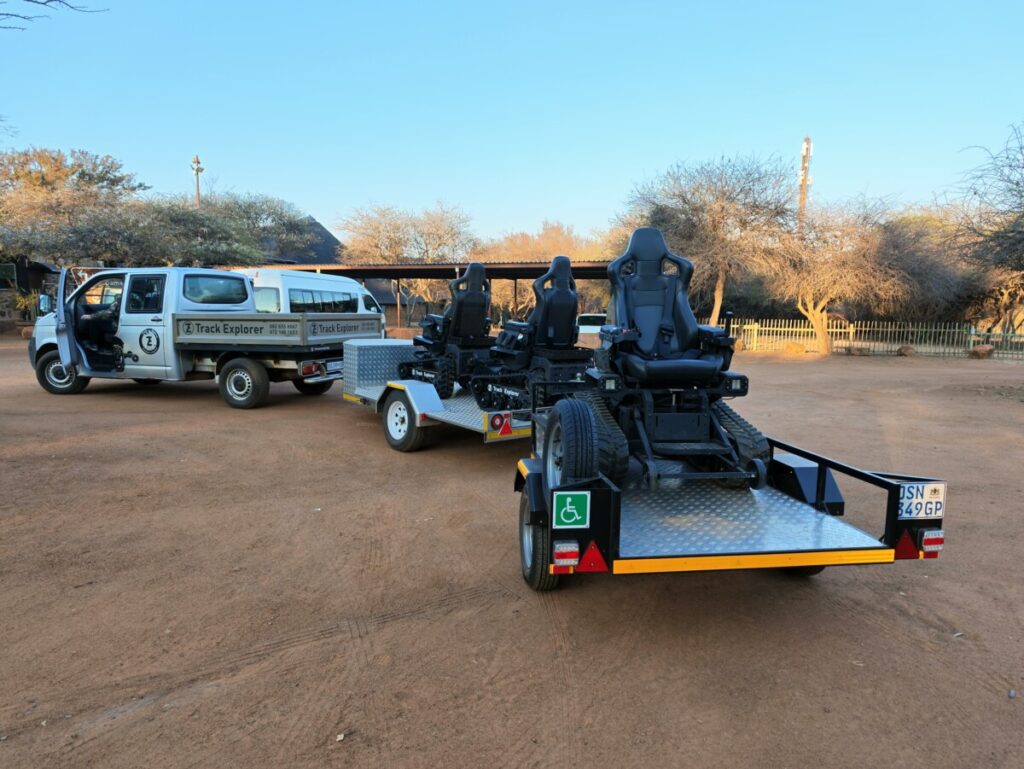
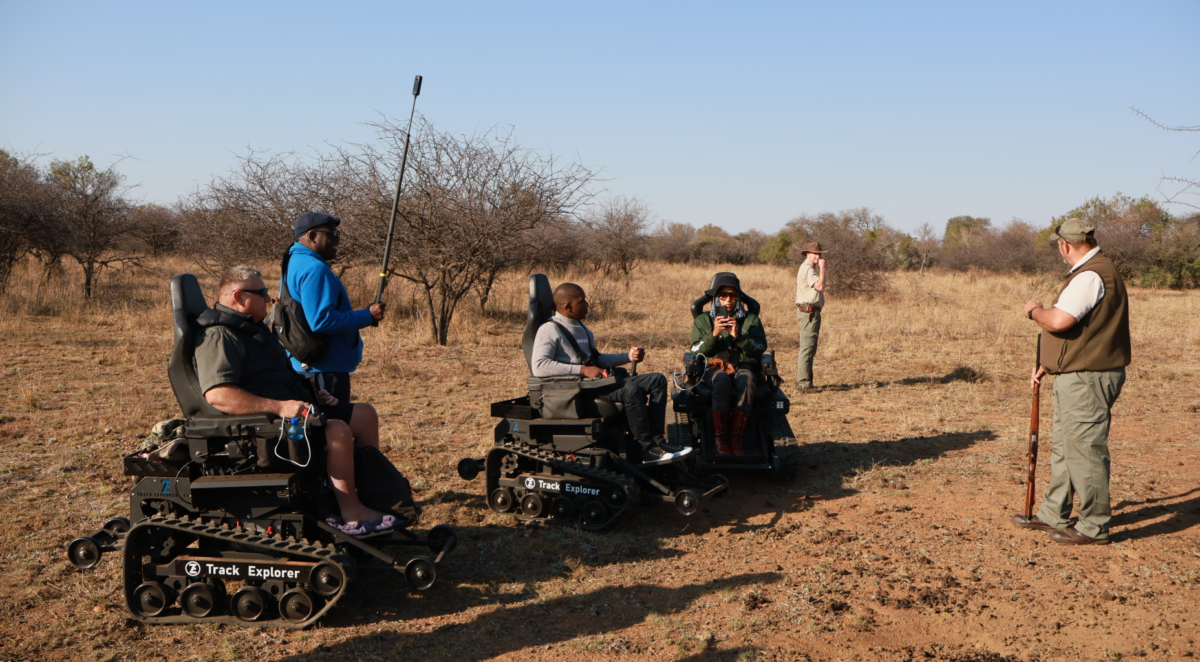
The three travelled in Track Explorer V1 all-terrain tracked mobility chairs, built in Tierpoort, Pretoria, about thirty minutes from the reserve. The chairs run on wide rubber tracks rather than wheels. Track Explorer, which builds with Astig Engineering and DuoActive Mobility, describes itself as the only producer of a track-based wheelchair in Africa.
Normie Eckard handles sales for Track Explorer. He is also a wheelchair user, and this was the first time he had taken one into a Big 5 reserve.
“It was an incredible experience,” he said. “Getting into the field, not going on the road, but taking the road less travelled. The slogan is freedom to explore and de-stress, and it really gives you that freedom to explore, to go into the field, to look at the animals like the giraffe we saw close by. That was very, very nice.”
He was direct about what comes next. “If we can expand this and get all of disabled people invested in this, and all the role players actually invested in this project, it will be a major step in the right direction to give people more accessibility, and to experience something like this like we are today.”
The guides
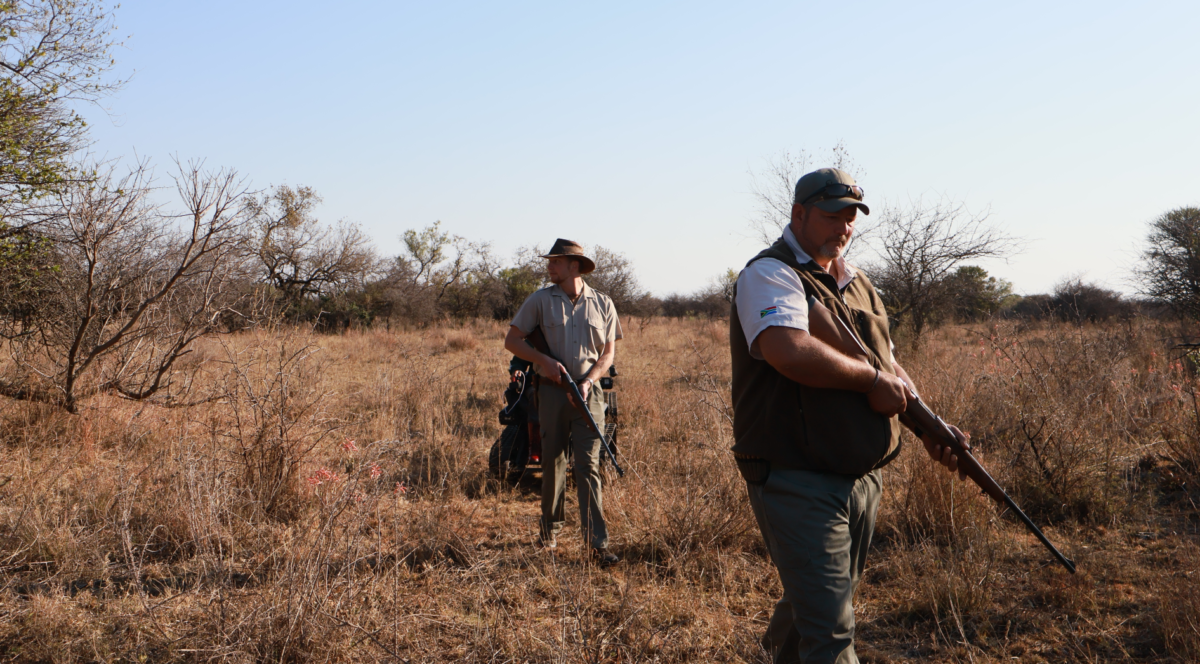
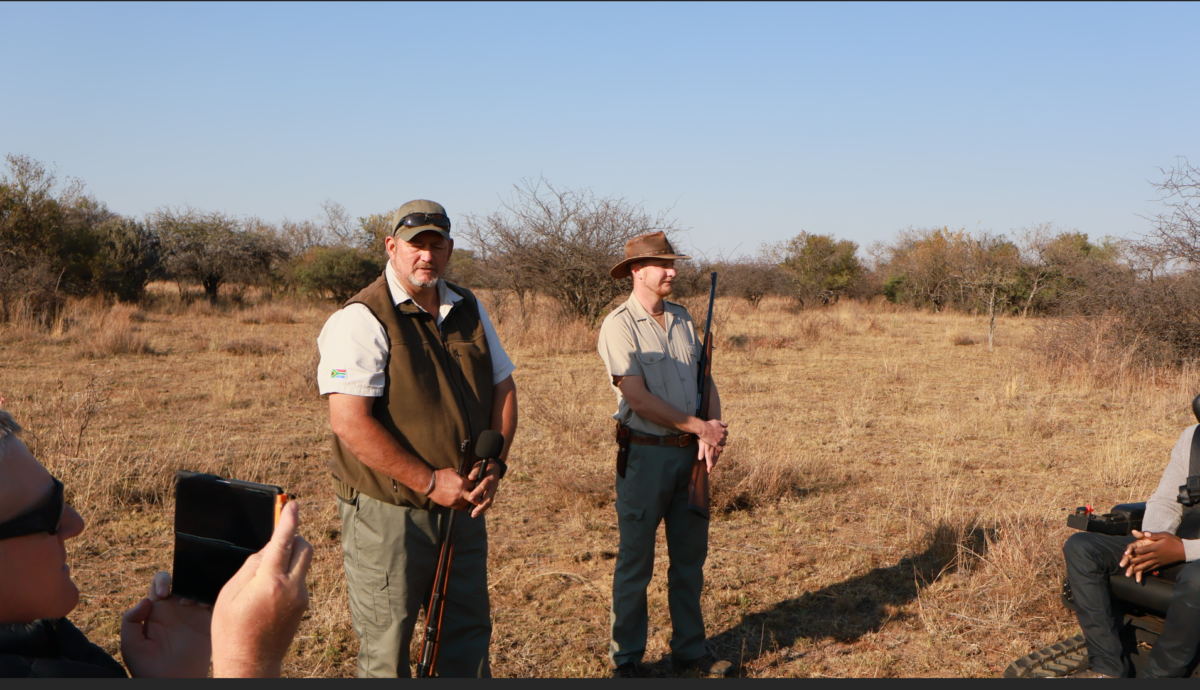
Field guides from Kwalata in the Dinokeng Reserve, Japie Bradley and Remco van Aalist led the walk and were professional throughout — reading the ground, choosing lines, adjusting as conditions changed, and treating the group as a walking party rather than a special case.
Nothing was built
No boardwalk. No paved path. No designated accessible route. No construction of any kind. The chairs went where the guides went.
This matters because “we cannot afford the infrastructure” is the first objection most operators raise. Here there was none. The reserve existed. The walk existed — Kwalata already runs guided walks for groups of four to eight with armed guides. The chairs are made in South Africa. The policy has been in place since 2012.
What was missing was a decision.
What happens next
THISABILITY Newspaper is treating this as the start of a programme, not a one-off. The plan is more experiences, plus the training that makes them repeatable: orientation for wheelchair users trying all-terrain activities, and disability etiquette and sensitisation training for lodge staff and guides.
The same equipment opens up hiking trails and beach and dune access, where soft sand defeats a conventional wheelchair. The intention is all-terrain activations across a range of settings, in South Africa and beyond.
An invitation to partner
To reserves, lodges, walking safari operators, tourism agencies and government departments: we would like to help you run one like the one we did in the Dinokeng Reserve.
We are documenting what this took — route, terrain, gradients, risk assessment, equipment specifications, what the guides changed, and an honest account of what did not work. We will share all of it, at no cost.
The first one is done. The second one should be easier.
Contact: THISABILITY Newspaper — Simon Manda, Email: simon@thisability.co.za