Albinism Awareness Month puts overlooked skin cancer risks in focus


Plastic surgeon urges South Africans not to ignore the small skin changes that could eventually require major treatment and reconstruction
September 2026: A sore that refuses to heal. A mole that starts changing. A small patch of skin that repeatedly bleeds or crusts. These changes can be easy to dismiss, but skin cancer is a potentially serious and life-threatening disease, and delaying assessment can allow even a small lesion to become considerably more difficult to treat.
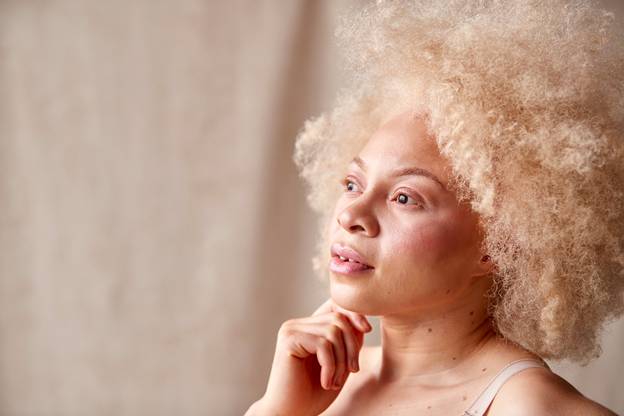
In September, South Africa observes Albinism Awareness Month, raising awareness of the health and social challenges faced by people living with albinism. Albinism is a genetic condition impacting the production of melanin, the pigment responsible for colour in the skin, hair, and eyes. Melanin also provides some natural protection against ultraviolet radiation, meaning people with albinism, who produce very little or no melanin, face a particularly high risk of sun damage and skin cancer.
Professor Chrysis Sofianos, a triple board-certified plastic surgeon and Academic Head of the Division of Plastic and Reconstructive Surgery at the University of the Witwatersrand, says this makes ongoing sun protection and vigilance especially important.

“Albinism Awareness Month rightly draws attention to the greater vulnerability of people with albinism when it comes to sun exposure and skin cancer. The important message is to protect your skin and know what is normal for you so that you can have any concerning changes assessed early.”
Early recognition can, however, be more challenging in people with albinism. Some skin cancers may lack the pigmentation people commonly associate with suspicious lesions, making it especially important not to rely on colour alone when deciding whether a change needs medical attention.
He says the month can also challenge the broader assumption that skin cancer is exclusively a disease of fairer skin. While darker skin and higher levels of melanin offer greater natural protection, this does not mean immunity. Certain forms of skin cancer can further occur in areas not typically exposed to the sun, including the soles of the feet, palms, and underneath the nails.
“Everyone should be familiar with their skin and pay attention when something changes, including in less obvious areas. If something doesn’t seem right, have it checked rather than dismissing it or trying to diagnose it yourself.”
Nearly 27,000 skin cancer cases recorded
Demonstrating just how common skin cancers are, South Africa’s National Cancer Registry recorded 26,967 cases across three major skin cancer categories in 2024. These included basal cell carcinoma (BCC), squamous cell carcinoma (SCC) of the skin, and melanoma.
Additionally, the NCR ranked BCC as the second most common cancer among men and third among women, while SCC of the skin ranked third among men and fourth among women.
“The numbers matter because skin cancer can still be perceived as relatively uncommon or as something that will always be obvious when it develops. In reality, many lesions begin as something very small and seemingly insignificant. People may watch a lesion for months because it’s small, painless, or seems like an ordinary mole, sore, or sign of ageing. But the absence of pain doesn’t mean there’s nothing to worry about,” explains Sofianos.
Warning signs can include a new growth, a sore that repeatedly fails to heal, a lesion that bleeds or crusts, and changes in the size, shape or colour of an existing mole.
When removing the cancer is only part of the treatment
Skin cancers affecting the nose, eyelids, ears, scalp and other areas of the face may require the removal of enough tissue to treat the disease. Depending on the size and position of the resulting defect, reconstructive surgery may then be required to preserve function and appearance.
“People often think of plastic surgery purely in aesthetic terms, but reconstruction after cancer treatment is a significant part of the speciality. When cancer is removed from somewhere such as the nose, eyelid, or ear, we are not only considering how the wound closes. We have to think about restoring form and function, and achieving the best possible outcome for that patient.”
For people with albinism, their ongoing vulnerability to UV damage can compound their treatment burden. Some patients may develop more than one cancerous or precancerous lesion over time, and treatment is not always a once-off event. Careful follow-up, continued skin protection, and early assessment of new lesions remain important even after one cancer has been successfully treated.
As a plastic and reconstructive surgeon, Sofianos regularly manages patients requiring reconstruction after cancer removal, and he notes that the consequences of delayed diagnosis are clearly visible. Larger lesions may require wider removal and reconstruction, with greater potential for visible scarring or prolonged wound healing. This is another reason why fear of a scar should never deter someone from seeking assessment early.
“The earlier we can identify and appropriately treat a cancer, the better our chance of limiting how much tissue needs to be removed and how extensive the reconstruction may need to be.”
Albinism Awareness Month should therefore reinforce the special protection required by people with albinism while reminding all South Africans of the importance of identifying any suspicious skin changes early.
“For people with albinism, careful sun protection and regular attention to the skin are critically important. More broadly, if a lesion is changing, bleeding, repeatedly crusting, or failing to heal, don’t ignore it. Have it assessed.”