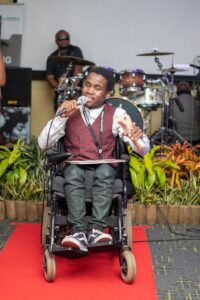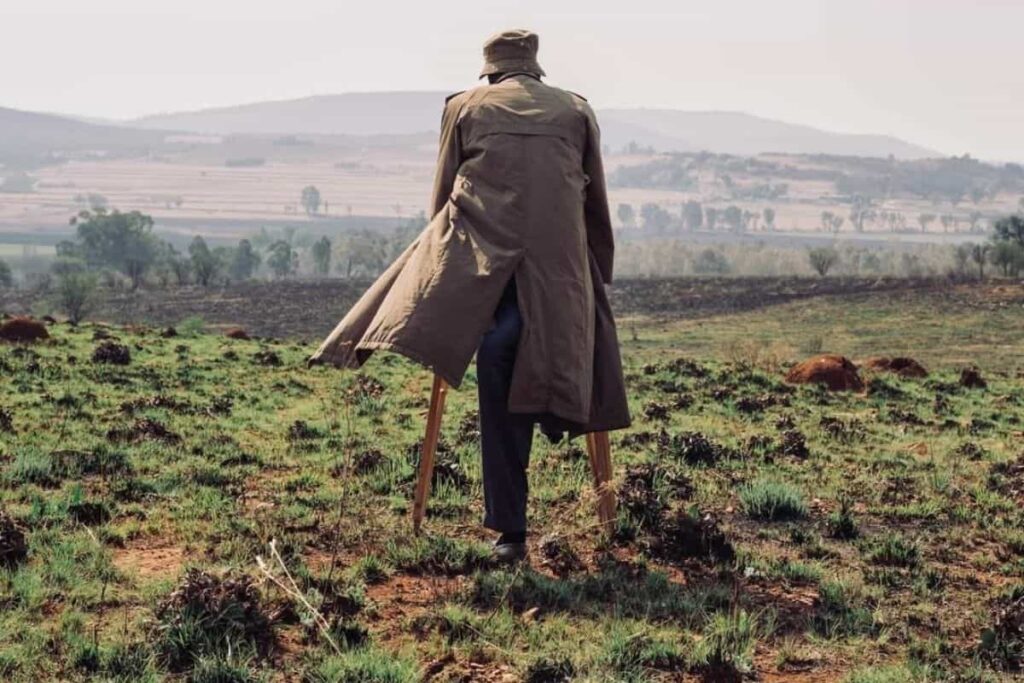
The Nkokheli character in Melusi. Picture: ntokozo.mlaba/Instagram

Authentic portrayal of disability in Melusi intentional.
When 24-year-old filmmaker Ntokozo Mlaba sat down to write his latest film, Melusi, he made a creative decision that would ripple far beyond the script. One of his central characters, Nkokheli, would be a person with a disability—not as a stereotype or afterthought, but as a fully realised human being whose lived experience shapes the story’s emotional core.
“I remember when I chose to make Nkokheli disabled whilst writing the plot for Melusi, because it would motivate the root of his resentment towards his brother,” Mlaba shared on Instagram. “Representation matters; characterisation is important.”
The timing of Mlaba’s reflection could not be more significant. As the world marked International Day of Persons with Disabilities on 3 December, his words serve as a powerful reminder of why authentic representation in film and media isn’t just nice to have—it’s essential.
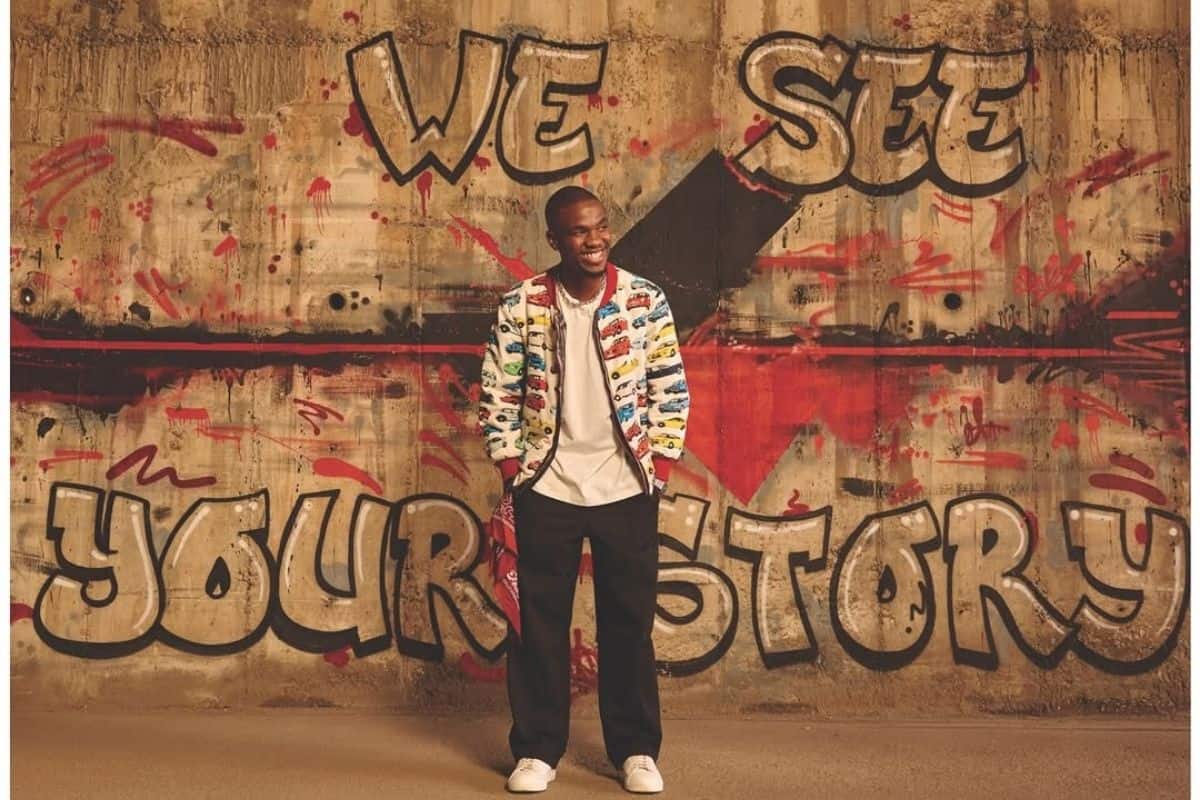
For Mlaba, who hails from Boksburg in Ekurhuleni, this commitment to meaningful storytelling did not happen overnight. His filmmaking journey began with a failed audition at the National School of the Arts—a setback that might have discouraged others but instead shaped his resilient approach to the craft. Despite initially pursuing a Bachelor of Commerce degree at the University of the Witwatersrand to please his parents, Mlaba couldn’t ignore his calling. He worked part-time at the Market Theatre whilst studying, slowly building the network and skills that would define his career.
His early determination was remarkable. For his first film, Mlaba raised money by recycling bottles and cans around Wits University, combining those funds with his personal savings. That resourcefulness has remained a hallmark of his work—Melusi itself came together after four months of intensive fundraising, supported by partners including AFDA, Known Associates Entertainment, and the Insumansumane Short Film Grant from Auteur Studios.
Now, with eight years in the industry and several acclaimed short films under his belt, Mlaba has established himself as more than just a filmmaker—he’s a cultural producer and social activist using cinema as a tool for community engagement and collective healing. Together with his partner Nokuthula Sibisi, he co-founded Umphakathi Artists, a non-profit organisation that fosters positive social change through art.
Through Umphakathi Artists, Mlaba runs Community Biskop Screenings, bringing curated film experiences to underserved communities and townships—providing African children with access to cinema they might otherwise never experience. The organisation also facilitates the H/ours initiative, offering drama and filmmaking sessions as school extracurricular programmes.
View this post on Instagram
In Melusi, set against the vibrant backdrop of rural KwaZulu-Natal during an Ingoma traditional dance competition, Nkokheli (portrayed by Wanda Zuma) emerges as the village’s moral compass. He has a leg amputation, but his disability is woven into his character rather than defining him entirely. The film follows young shepherd Melusi’s dreams of becoming a taxi driver in Johannesburg—dreams that lead him to make choices with unexpected consequences.
View this post on Instagram
“Disabled from an old injury, Nkokheli leads with authority, demanding discipline and respect in a community that often resists both,” Mlaba explained. “He hides a soft heart behind a hardened face, struggling to balance being a leader and a brother.”
What makes Mlaba’s approach so refreshing is his commitment to truth rather than spectacle. The character’s disability is not there for shock value—it is integral to understanding who Nkokheli is and why he relates to his brother the way he does.
Perhaps most tellingly, Mlaba found validation for his creative choice in an unexpected moment. Visiting a neighbour one day, he encountered someone he had always known as non-disabled, now sitting with one leg and crutches beside him, wearing a look of profound sadness. “In my mind, I was like, that’s Nkokheli,” Mlaba recalled.
Actor Wanda Zuma, who brought Nkokheli to life, understood this sensitivity. “I think it’s easy to play an antagonist with anger and rage, but when you interrogate the root of the animosity, you’ll find there is love there,” Mlaba noted. “Wanda’s portrayal was sensitive to that.”
View this post on Instagram
The broader context makes this representation even more crucial. According to the World Health Organisation, more than 188 million people across the African region have some form of disability. Yet they remain amongst the most marginalised in society, facing persistent barriers to health services, education, transport, and employment.
In South Africa, despite legislation requiring companies to employ 3% of persons with disabilities, only 1.2% of the workforce are persons with disabilities—a gap that speaks volumes about how far we still need to travel. Which is why Mlaba’s deliberate, thoughtful approach matters so much. Because when we see ourselves reflected authentically in the stories our culture tells, it changes what we believe is possible.