Oarabile Botlhokwane

Oarabile Botlhokwane on Purpose, Sport, and the Race That Belongs to Everyone
On Sunday, 10 May 2026, something remarkable will happen simultaneously across the globe. Hundreds of thousands of people — runners, walkers, wheelchair users, first-timers, Olympians and everyone in between — will set off at exactly the same moment in cities spanning every time zone. No one will cross a traditional finish line. Instead, 30 minutes after the start, a Catcher Car begins its pursuit, steadily increasing its speed until the last participant has been caught. The distance you cover before the car reaches you is yours. That is the Wings for Life World Run.
Now in its 13th edition, the Wings for Life World Run is the largest charity running event on the planet. It is backed by Red Bull and built around one uncompromising commitment: 100% of every registration fee and donation goes directly to spinal cord injury research. Not a percentage. All of it. The Wings for Life foundation — a not-for-profit organisation established in 2004 — has spent over two decades funding research projects and clinical trials around the world, working towards a day when a spinal cord injury is no longer a life sentence.
The numbers behind the movement speak for themselves. Across all editions of the event to date, 1,870,253 registered participants from 191 nationalities have run, walked, and rolled on all seven continents, together raising over €60.53 million for spinal cord injury research. In 2025 alone, 310,719 people took part — a record at the time. The 2026 edition is expected to go further.

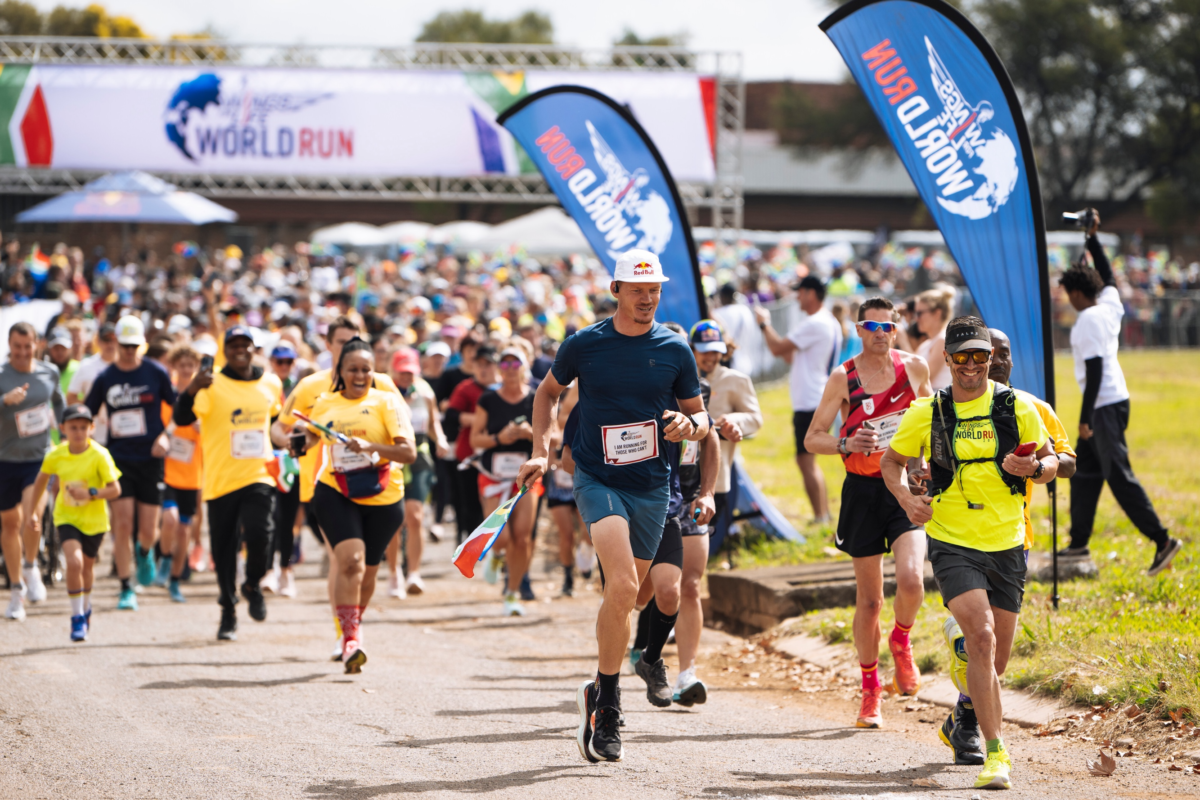
Worldwide, millions of persons with spinal cord injuries — most as the result of a car accident or a fall. For many, the injury arrives without warning, on an ordinary day, in the middle of a life still being built. Inclusive by design, this race was built around exactly those people. Professional athletes, passionate amateurs, wheelchair users and absolute beginners start side by side, all moving for the same reason.
South Africa participates through App Run Events in Cape Town and Pretoria, with the app also enabling anyone anywhere in the country to join the global field from their own route. You run wherever you are, the app tracks your distance, and you are connected in real time to every other participant on earth. Participants may also choose to register for one of the large-scale Flagship Runs held internationally.
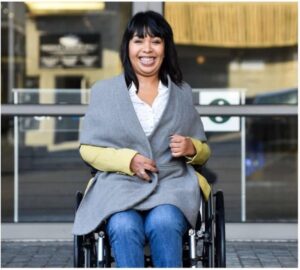
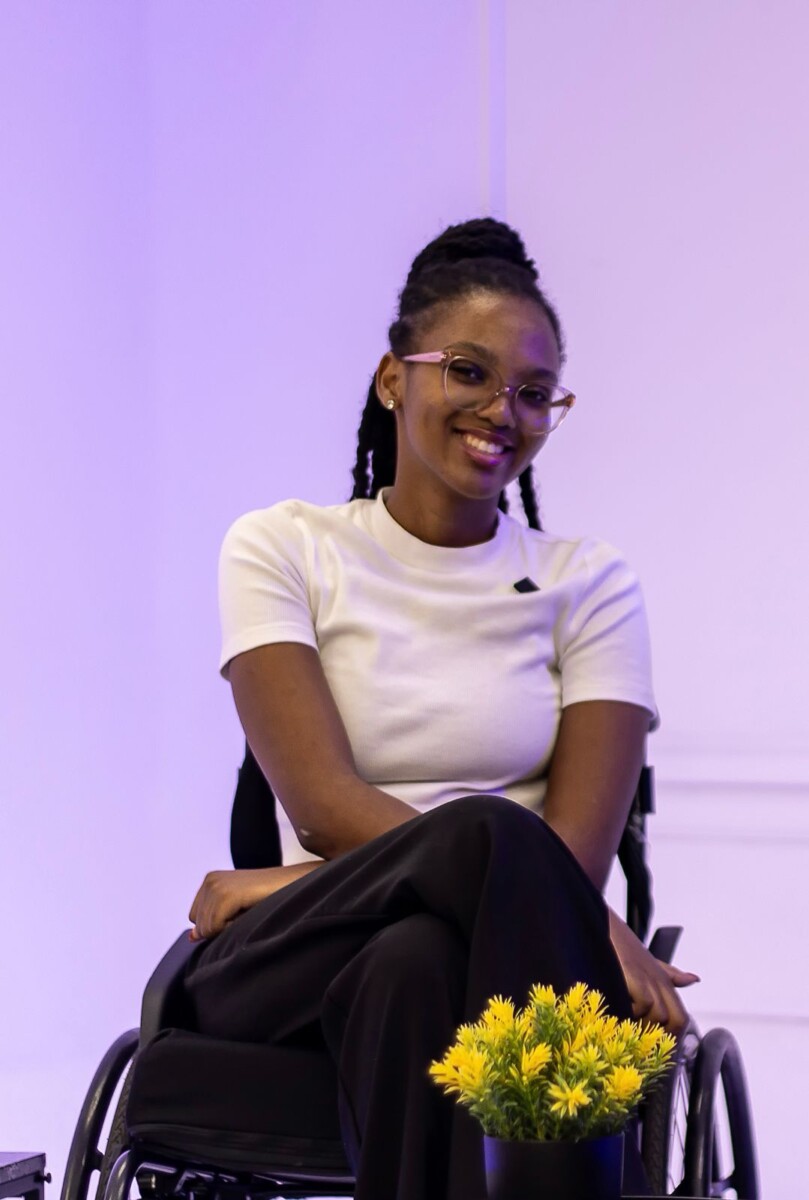
This year, Oarabile Botlhokwane — known to those close to her as Ora — brings her own story to the race. She was 20 years old, mid-degree, and a year into a sports marketing role with the Titans cricket team at SuperSport Park, when a car accident in Centurion in October 2023 left her with a broken neck. What followed was ICU, surgery, rehabilitation, and the harder, quieter work of finding her way back. She sat with us to talk about what this race means, why it matters, and why she wants more people to show up on 10 May.
In Conversation with Oarabile Botlhokwane
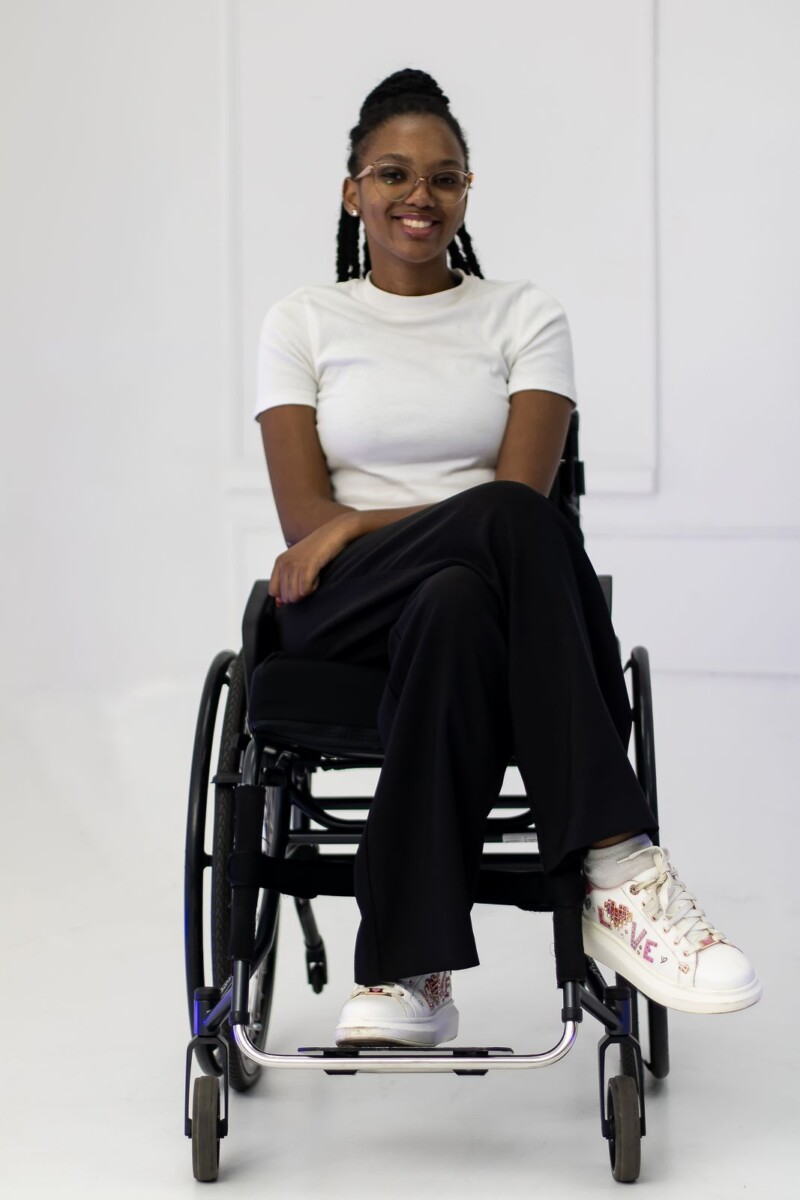
TN: Oarabile, being part of Wings for Life is not just a title — it connects you to something much bigger than sport. This is a global race where 100% of every registration fee goes directly to spinal cord injury research, and South Africa is part of that on 10 May 2026. What does representing something like this mean to you, especially given what you know about how injury can change a life in an instant?
Oarabile:
“Representing or being associated with an initiative such as the Wings for Life World Run carries real meaning for me. It is an opportunity to be part of a conversation that is focused on progress and finding a solution — when not long ago, that was not even a possibility. It is about showing that there is purpose in pushing forward, both in sport and in life, and being connected to a community that is doing the same on a global scale.
Being a part of Wings for Life means being part of a global effort that is actively working to shine a light on spinal cord injury awareness — and that matters to me because the reality is that people do not know what they have not yet been exposed to. Speaking for both my family and myself, if it were not for my own experience, spinal cord injury is a world we would never have thought about.
Having experienced firsthand how quickly life can change, a spinal cord injury is not something I observe from the outside. I understand how deeply it impacts not just the individual, but every part of the life that follows.”
This initiative is not just about running. It is about what we are running towards.
TN: You have spoken about using your voice for people who cannot advocate for themselves. Without that being just a line on a page — what was the moment in your own life that made you understand, deeply, what it feels like to be on the other side of that? And how has that shaped the work you do today?
Oarabile:
“This is a thought-provoking question because, in many ways, I have not fully experienced the other side of advocacy in the way one might assume. Since the accident, I have remained committed to advocating for myself — and that has been a significant part of my journey. At the same time, I deeply recognise and value the advocacy others have shown on my behalf. My family and rehabilitation team played a critical role in ensuring I felt consistently supported. They spoke up for me and made sure my voice was heard, and that level of care has not gone unnoticed.
Experiencing both self-advocacy and being advocated for has shaped a deeper sense of purpose in how I show up for others. While I have always understood the importance of speaking up for people, it was only through being supported in that way that I truly felt the impact of having someone stand in your corner when it matters most.
Having taken time away from work, I am still exploring how this evolved understanding of advocacy will influence my approach going forward. I have only recently begun to re-engage in that space, so it is still developing — but it is a conversation I am looking forward to continuing.”
TN: Cricket has been central to who you are — from coaching high school girls to working with the Titans and Cricket South Africa’s marketing campaigns at SuperSport Park in Centurion. Sport gives people identity, belonging, purpose. What does sport give you, and how has that relationship changed or deepened over time?
Oarabile:
“Sport has given me, above all else, a sense of community. It is where I found my identity, purpose, and belonging from a young age. Since I was 13, it has shaped not only what I do, but who I am. Over time, my relationship with sport evolved. I began as an athlete playing cricket, but I soon realised that my true fulfilment extended beyond participation. What resonated most with me was everything surrounding the game.
From coaching and team management to working in media and marketing, I found purpose in creating meaningful experiences for others. Whether it was ensuring that players felt prepared and confident on match day, or watching a venue like SuperSport Park come to life during my time with the Titans — I found fulfilment in the detail and coordination behind the scenes.
Following the accident, my relationship with sport shifted significantly. I entered a phase where I could no longer engage in those roles in the same way, particularly in environments that required constant movement and high physical demands. Losing access to something so closely tied to your identity and joy is not an easy experience.
But I do not see this moment as an end point. I see it as a transition. I am actively exploring new ways to reconnect with sport in a manner that aligns with my current reality — whether through wheelchair rugby or through continued contribution to media and marketing. At my core, my passion for sport is unchanged. It is simply evolving, and I am evolving with it.”
TN: The Wings for Life World Run is designed so that runners, walkers, and wheelchair users all start at the same time, across the globe, with no traditional finish line. The Catcher Car comes for everyone equally. In your work in sports media, broadcasting, and advocacy, you have built your career around inclusion and representation. What does it mean to you that a race like this was designed from the ground up to not leave anyone behind?
Oarabile:
“What resonates with me most is that inclusion in this race is not treated as an add-on. It is not something introduced later to improve accessibility — it was intentionally designed from the outset with everyone in mind. That, to me, is incredibly powerful. Too often, inclusion feels secondary. Something people must request or be accommodated for, rather than something that is inherently expected.
With the Wings for Life World Run, there is a genuine sense of equality from the very beginning. Everyone starts together, shares the same experience, and is measured by the same standard through the Catcher Car. On a personal level, that distinction is meaningful. It reflects the difference between simply being included and truly belonging — between being given space and recognising that the space was always meant for you.
This initiative demonstrates what it looks like when values around access and community are fully embedded rather than merely discussed. It sets a benchmark not just for sport, but for how participation should be approached everywhere. It is not only about ensuring no one is left behind. It is about ensuring that no one is ever treated as an afterthought.”
TN: For someone sitting at home right now — maybe someone who does not think of themselves as a runner, or someone who has been told their body cannot do these things — what would you say to get them off the couch and onto that start line, or even just to download the app? Why should this particular race be the one that gets them moving?
Oarabile:
“You do not need to identify as a runner to take part. Whether you roll, walk, jog, or run — this is a space where you are welcome to show up exactly as you are. What sets this race apart is that it meets you at your level. You simply begin and go as far as you can, while sharing in the same global moment as participants on every continent. There is no pressure to perform. Only the opportunity to be part of something.
For anyone who feels that their body cannot — the Wings for Life World Run offers an environment that gently challenges that belief without imposing it. It is not about proving anything to anyone else. It is about exploring what is possible for you.
And more importantly, you are contributing to something greater than yourself. Every effort — every kilometre, every step — supports research that is genuinely transforming lives. So regardless of how you start or how far you go, your participation matters. It always has.”