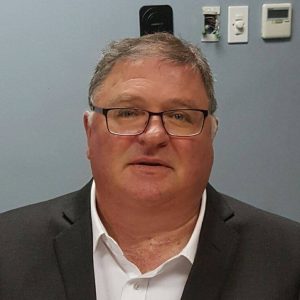
Ari Seirlis

2026 Disability Rights Awareness Month (DRAM): Issues and Solutions
By Ari Seirlis
This Disability Rights Awareness Month I want to reflect on only a few but important issues that affect us persons with disabilities in South Africa and some solutions that would need civil courage and a leap of faith from both Government, Civil society and the Disability sector, in order to establish some level playfield and an integrated society.
‘’It always seems IMPOSSIBLE until it’s done’’ said Nelson Mandela.
The theme of my article is: IT’S POSSIBLE and you will see why.
Disability inclusion is not an act of charity, an exercise in goodwill or a box to be ticked to satisfy legislation. It is a matter of human rights, economic justice and equal opportunity. We cannot speak meaningfully about employment equity if people with disabilities cannot access the education and skills development that prepare them for work.
We cannot speak about workplace inclusion if employers are unwilling to embrace reasonable accommodation and recognise the value, talent and potential that people with disabilities bring.
We cannot speak about economic participation when the very infrastructure of our society, our transport systems, public services, buildings and public spaces continue to exclude us. You cannot empower someone to participate in society while simultaneously designing a society that prevents us from participating.
The challenge before us is therefore much bigger than getting us people with disabilities into employment. It is about dismantling the barriers that prevent us from becoming educated, skilled, employed, economically independent and socially integrated. This Disability Rights Awareness Month, let us move beyond awareness, beyond promises and beyond compliance. Let us demand accountability, challenge exclusionary thinking and insist on a society where disability does not determine opportunity.
Inclusion is not achieved when we make space for people with disabilities in a system that was never designed for them. It is achieved when we transform the system so that everyone has an equal opportunity to participate, contribute and thrive.
My article focuses on the issues of Education, Infrastructure, Transport, Empowerment and Employment.
Education is the most critical right for young people with disabilities.
I would identify the following three major education challenges facing persons with disabilities. They are interconnected and, importantly, they affect not only access to education but also the ability to develop skills, secure employment and achieve economic independence.
Firstly, inadequate access to inclusive and quality education. Many mainstream schools are still not equipped to accommodate learners with disabilities. Insufficient numbers of special schools, resulting in long waiting lists and learners being turned away. Inaccessible classrooms, toilets, libraries, laboratories and other school facilities. A shortage of adequately trained teachers who understand inclusive education and different learning needs.
Solutions could be to accelerate the implementation of inclusive education in mainstream schools. Train and equip teachers to support learners with different disabilities and ensure that no child is denied education because of their disability.
Secondly, the lack of appropriate learning support, assistive technology and reasonable accommodation. Inadequate access to assistive devices, including wheelchairs, hearing aids and communication technology.
A shortage of learning materials in accessible formats, including Braille, large print, audio and digital formats.
Insufficient access to sign language interpreters, learning support professionals and specialist educators.
Limited individualised support for learners with intellectual, sensory and physical disabilities. Assessments and examinations do not always accommodate the needs of learners with disabilities.
Solutions could be to provide assistive technology and devices as an essential part of the education system, not as an optional extra. Make all learning materials available in accessible formats. Provide reasonable accommodation in teaching, examinations and assessments. Recruit and train more specialist educators, therapists and support professionals. And ensure that support is provided according to individual needs, rather than applying a one-size-fits-all approach.
Thirdly, inadequate access to education-related transport, early intervention and post-school skills development. Many learners cannot attend school because accessible and specialised scholar transport is unavailable. Children in rural communities face particularly severe barriers to accessing appropriate schools and support services.
Insufficient early childhood intervention means that developmental and learning needs are not identified and supported early enough. Limited access to universities, TVET colleges and vocational training opportunities. Skills development programmes do not always prepare learners with disabilities for meaningful employment and economic independence.
Solutions are to strengthen early childhood development and early identification programmes. Make universities, TVET colleges and training centres physically and academically accessible. Expand vocational training, digital skills development and work-readiness programmes. Build partnerships between educational institutions and employers to create pathways into employment.
South Africa does not suffer from a lack of disability policies. It suffers from a failure to implement them effectively. Education White Paper 6, introduced in 2001, established the vision for an inclusive education system. Yet implementation remains a significant challenge. The Auditor-General’s 2025 findings highlighted shortcomings in transport, infrastructure, qualified teachers and assistive devices.
‘Education is not simply about getting a child with a disability through the school gates. It is about ensuring that they leave those gates with the knowledge, qualifications, skills and confidence to participate meaningfully in the economy and in society.’
If we fail at education, we are effectively creating the unemployment and economic exclusion that we will later spend decades trying to address.
Inclusion must begin in the classroom, not at the employment interview.
Here is another take on a radical transformation. Can you imagine a bold move whereby the Department of Education, closed all special schools on one single day and integrated all the learners onto one mainstream campus in the same area and had the necessary teachers, assistive devices, reasonable accommodation and accessibility to support the learners with disabilities as they had next door.
Yet the bold move would allow for the kids/learners to engage at lesson break time, in the dining rooms and on the sports field. All learners would understand each other’s abilities, disabilities, skills and aspirations. If this bold move were to happen, you could put a 12-year sunset clause on the Employment Equity Act.
IT’S POSSIBLE
The elephant in our room is Transport and Infrastructure.
Pillar 1 of the White Paper on the Rights of Persons with Disabilities quotes in its introduction ‘’The creation of barrier-free environments requires collective and concurrent action by law and policy makers, service providers, regulatory bodies, the private sector as well as organisations of and for persons with disabilities’’
Now imagine being qualified for a job, educated, skilled, ambitious and ready to contribute to society, but being unable to get to work because there is no accessible transport. Imagine being invited to a meeting, a school, a hospital or a public building, only to discover that you cannot get through the door, navigate the corridors or use the facilities once inside. That is not a disability problem. That is a failure of society.
We often speak about the importance of inclusion, equality, human rights and equal opportunities for persons with disabilities. But these are empty promises if people cannot physically access the places where life happens.
Transport and the built environment are not simply about roads, buses, pavements, ramps and buildings. They are about access to education, employment, healthcare, independence, dignity and participation in society.
You cannot claim to include people while building a world we cannot enter, and you cannot speak about equal opportunity when some people cannot even get to the starting line.
I want us to shift the conversation from disability to responsibility. The question is no longer whether persons with disabilities can participate in society. The question is whether we are prepared to remove the barriers that prevent them from doing so.
Because inclusion does not begin when a person with a disability enters a building. It begins when we design a world in which they never had to fight to get through the door in the first place.
Has Bus Rapid Transport been successful? Did the Taxi recapitalisation programme benefit us as intended? Can we catch a long-haul bus? Is there accessible transport in rural areas? Can we catch a Metro train service or long-distance train? The answer to all is NO.
What do we do about this?
Do not issue a permit/license or award a tender to any subsidised transport provider whose rolling stock is not accessible. Not every 3rd bus. Every bus. The same with rail concessions and licenses. PRASA has a lot to answer for and a lot of catching up to do.
The private sector must be dealt with differently. Tax incentives could drive change as well as offering the private sector some public sector opportunities providing, they invest in the accessible infrastructure and rolling stock.
IT’S POSSIBLE
In terms of infrastructure: – The latest SANS PART S10400 off the Building regs (2025) is an improved document. Make sure it is understood. Make sure it is applied. Make sure it is enforced. Make sure it is policed and prosecute for any deviation.
IT’S POSSIBLE
Unfortunately, inaccessible existing buildings go under the radar for now. If I had it my way, Id knock them all down and say ‘’start again and comply’’. Ask the Europeans after WW2. IT’S POSSIBLE.
My last focus in this article is Economic participation and Employment
Persons with disabilities are not excluded from the economy because they lack the ability to contribute. They are excluded because the economic environment is often designed in ways that deny them the opportunity to participate.
Inaccessible transport and infrastructure!
You cannot participate in the economy if you cannot get to where the economy happens. Employment discrimination and employer attitudes!
Employers frequently make assumptions about the capabilities and productivity of persons with disabilities. Disability is sometimes viewed as a cost, a risk or an administrative burden rather than an opportunity to access talent.
Recruitment processes, interviews and psychometric assessments are often inaccessible. Employers may be reluctant to provide reasonable accommodation. Persons with disabilities are often concentrated in lower-level positions, with limited opportunities for promotion and leadership.
The biggest barrier is often not a person’s disability, but an employer’s perception of it. Failure to implement reasonable accommodation! Employers do not always understand their responsibility to provide reasonable accommodation.
Assistive devices adapted workstations and accessible software are sometimes treated as optional extras. Employees may be expected to fund their own accommodation. There is insufficient understanding that reasonable accommodation is about removing barriers, not giving preferential treatment.
Workplace policies and practices often fail to recognise different disability-related needs. Equality does not mean treating everyone identically. It means creating the conditions in which everyone can contribute.
Access to finance and entrepreneurship!
This is a particularly important issue that is often overlooked. Persons with disabilities who want to start businesses face difficulties accessing start-up capital and business finance. Financial institutions may have inaccessible application processes and inadequate understanding of disability-related business needs. Access to government funding, enterprise development programmes and business support is limited.
Disability-owned businesses struggle to access mainstream procurement opportunities and corporate supply chains. Inaccessible commercial premises and business facilities create further obstacles. Economic empowerment must include the opportunity to become an employer, not simply an employee.
Digital exclusion and technology!
Websites, recruitment portals and online application systems are not always accessible. Many digital platforms are incompatible with assistive technologies. Digital literacy programmes often fail to accommodate different disabilities. Inaccessible banking platforms and e-commerce systems limit independent economic participation. In an increasingly digital economy, digital accessibility is economic accessibility.
Poverty, dependency and the cost of disability!
Persons with disabilities often face additional costs associated with transport, assistive devices, personal assistance and healthcare. These additional costs reduce disposable income and the ability to accumulate wealth. Social protection is essential, but it must be complemented by pathways into employment and entrepreneurship.
There is a need to ensure that social assistance arrangements do not unintentionally discourage people from pursuing economic opportunities. It is difficult to escape poverty when disability itself creates additional financial barriers. Government policy versus implementation! South Africa has a relatively progressive legislative and policy framework, but implementation remains a major weakness.
The White Paper on the Rights of Persons with Disabilities provides a framework for economic inclusion, but implementation is uneven. Employment equity commitments have not translated into adequate workplace representation. Government departments often work in silos, resulting in fragmented. Monitoring, accountability and consequences for non-compliance need strengthening.
Persons with disabilities are not sufficiently represented in economic decision-making structures and disability organisations must be meaningfully involved in policy development, implementation and monitoring.
Rather than simply describing the problems, I would challenge government and the private sector to commit to five things:
- Accessible infrastructure and transport: Make universal design a non-negotiable requirement in all new infrastructure and transport developments.
- Meaningful employment: Move beyond recruitment targets and create pathways into skilled employment, management and leadership.
- Entrepreneurship and procurement: Give businesses owned by persons with disabilities meaningful access to finance, enterprise development and supply chains.
- Education linked to economic opportunity: Ensure that inclusive education, vocational training and skills development lead to real opportunities in the economy.
- Accountability: Introduce measurable targets, transparent reporting and consequences for failing to implement disability inclusion commitments.
We must measure inclusion by the number of people who are employed, the businesses that are established, the incomes that are earned, the careers that are built and the opportunities that are created.
IT’S POSSIBLE
Where do we go from here?
We have to speed up the process for a pending Disability Act now named The Protection & Promotion of Persons with Disabilities Bill.
Being in limbo is no good, disability issues don’t go into limbo, they exist every day, all day. This Bill will empower us to make the changes we seek so desperately. The White Paper on the Rights of People with Disabilities (2016) certainly covers adequately the bones of this proposed Bill.
And maybe an unusual strategy, untried, but what the hell. Nothing ventured, nothing gained.
Self-representation in Politics.
The recent Local Government elections have shown us the tides of change are happening. But still without us. There are too few councillors with disabilities, if any! With less than 3 years to the National Government elections, here is my thinking. With a little bit of research, the numbers are interesting.
Let’s crunch them quickly and no thumb-suck.
There are approximately two million Persons with Disabilities of voting age. If only 50% of them vote for one party. To get a seat in the National Assembly. The stats on the 2025 elections conclude that 30 000 votes for a Party secured a seat on the benches of the National Assembly. Then one million votes would mean 33 seats! Say just one other person supports us. Easy peasy. My mother, father, husband, wife, brother, sister or a good friend would convert this to 66 seats. Probably more.
There is another constituency of voters, that being older persons who eventually morph into our space of mobility, sight, hearing or other disabilities, will realise that this party understands their needs. That constitutes another one million votes at least. Now 99 seats and so on and so on.
Say the party was the South African Disability Alliance (SADA)! We would be the official opposition. It would be a huge effort and a big campaign cost, but ITS POSSIBLE.
This is by no means a challenge or a threat. But maybe it should be. Why? Because IT’S POSSIBLE.
Let me end off on this same political note and quote the author.
‘’I would definitely vote for someone who is blind and cannot see than for someone who can see but has no vision. I would definitely vote for someone who is deaf and cannot hear than for someone who can hear but does not listen. I would definitely vote for someone who cannot walk than for someone who never walks their talk”
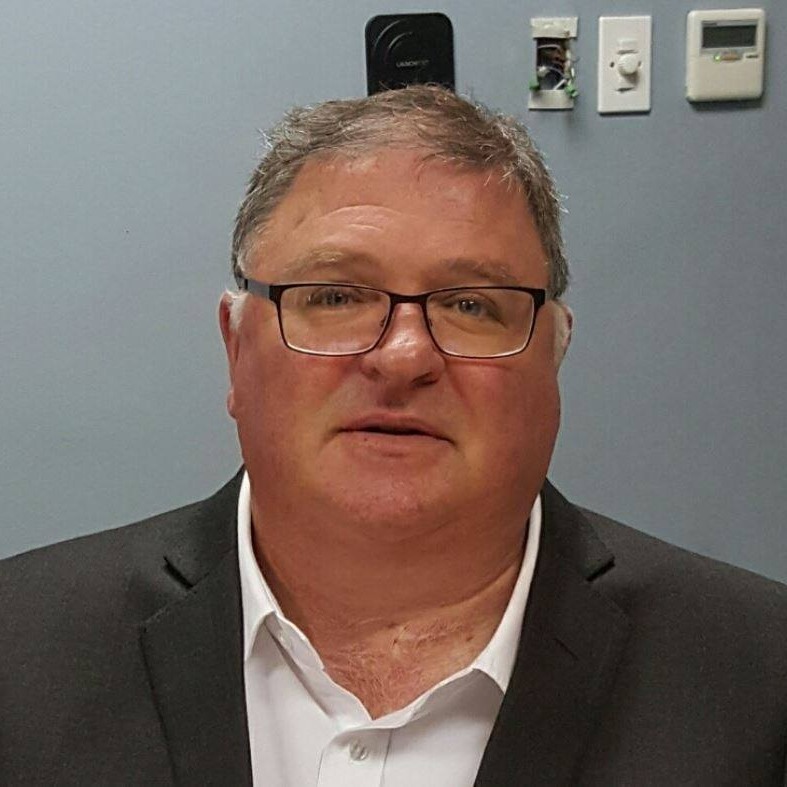
Ari Seirlis
- Former CEO of the QuadPara Association of South Africa (QASA)
- Management Board of the South African Disability Alliance (SADA)
- Management Board of QASA
- Member of the Presidential Working Group on Disability (PWGD)
- National Executive Committee of Epilepsy South Africa
- Member of Disability Advisory Group in the Department of Public Works and Infrastructure
- Member of Disability Advisory Group in Stats
- Trustee of the Quadriplegic and Paraplegic Charitable Trust
- SADA Lifetime Achievement Award (2026)