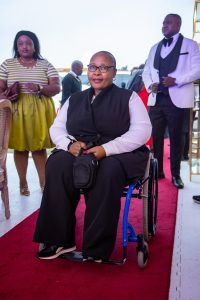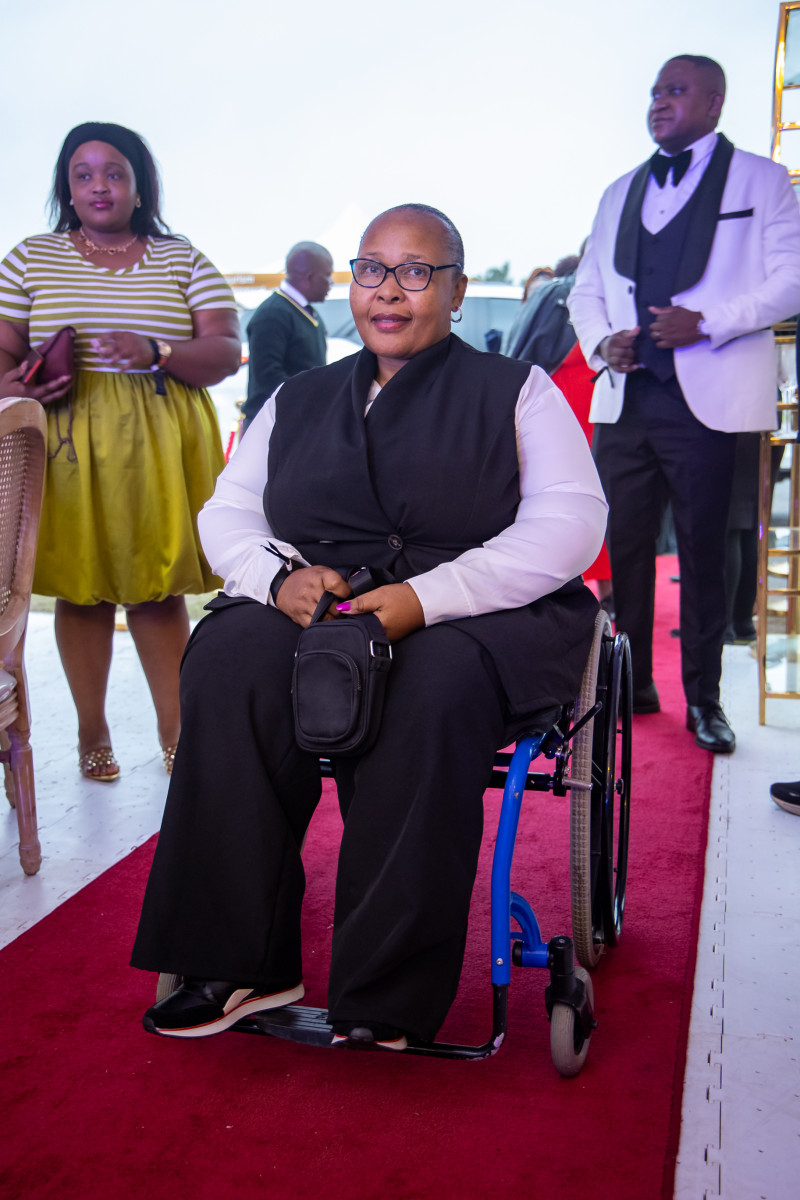
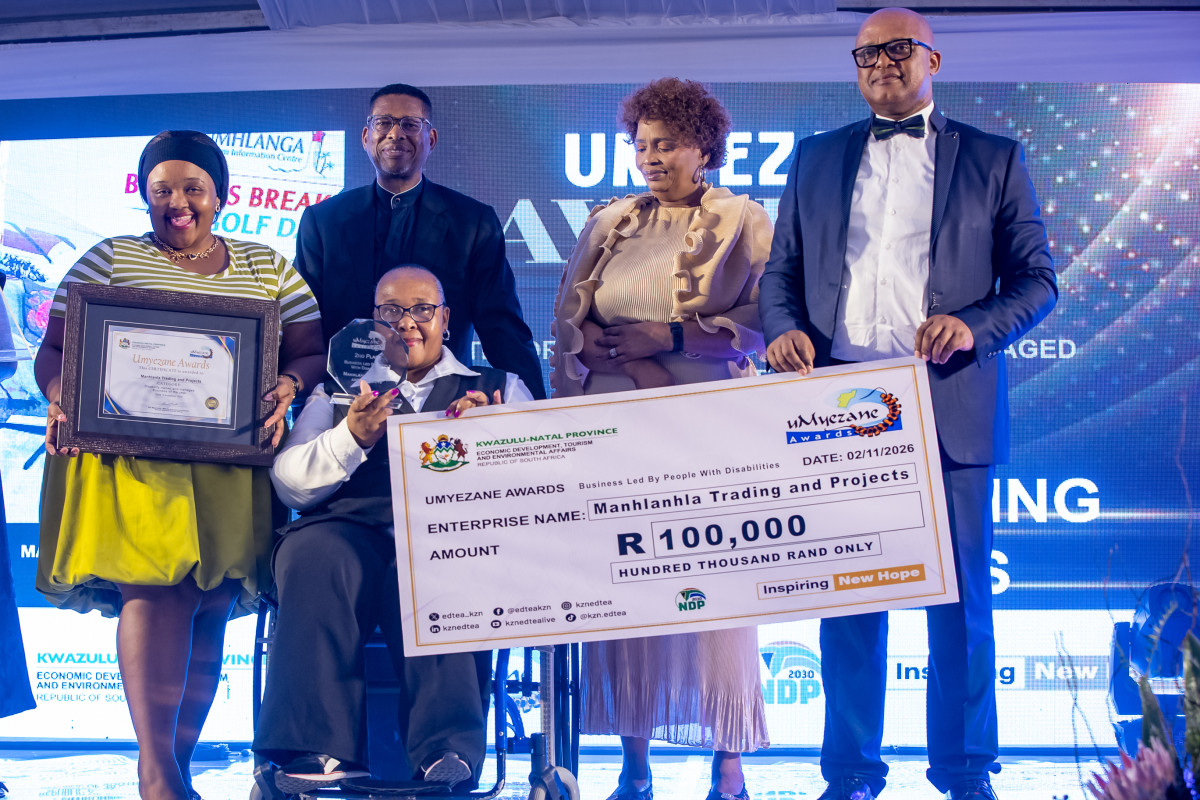
Manhlana Trading and Project owner Hloniphekile Masuku was recognised at the Umyezane Awards 2026

Three disability-led businesses share R300,000 at the KZN Umyezane Awards 2026
Durban, KZN – Three KwaZulu-Natal businesses led by persons with disabilities walked away with R300,000 in prize money at the Umyezane Awards 2026, held on 2 November at the Greyville Convention Centre in Durban.
The KwaZulu-Natal Department of Economic Development, Tourism and Environmental Affairs (EDTEA), led by MEC Rev. Musa Zondi, hosted the awards alongside the KZN Business Compliance Indaba, which ran over 2 and 3 November. The event opened on the eve of Disability Rights Awareness Month, observed in South Africa from 3 November to 3 December.
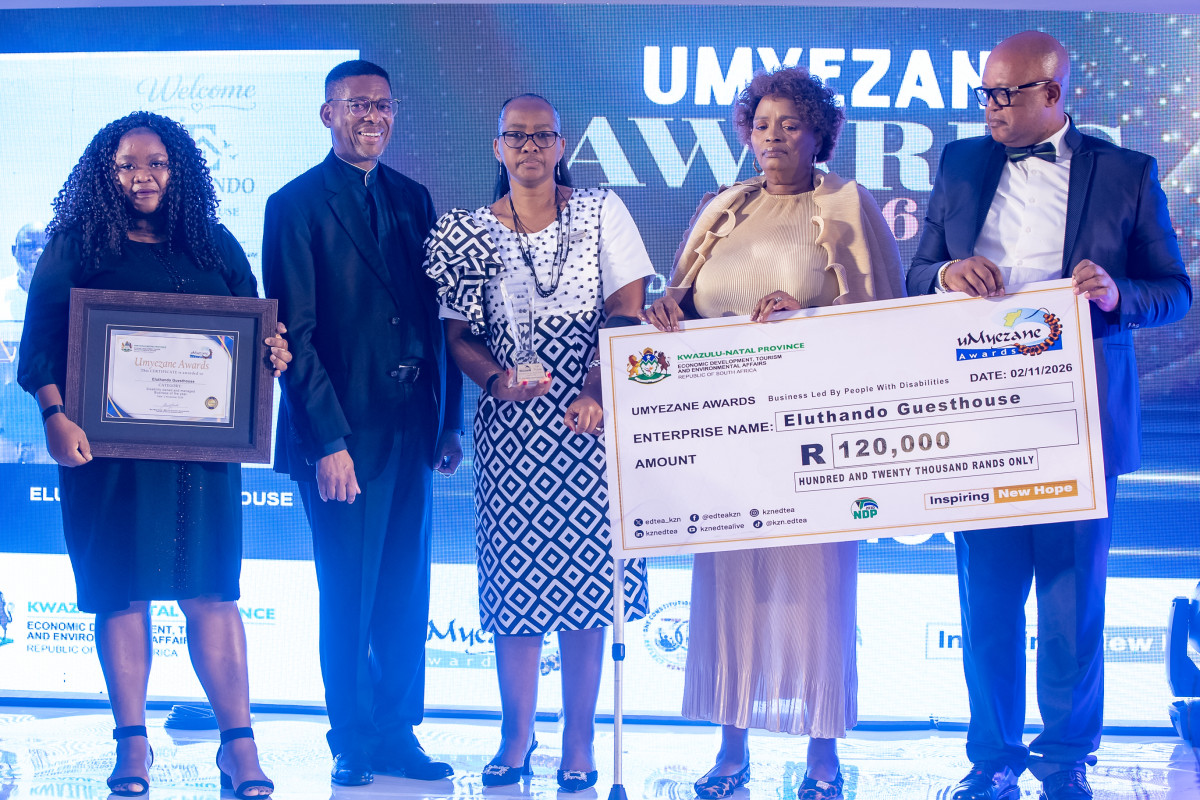
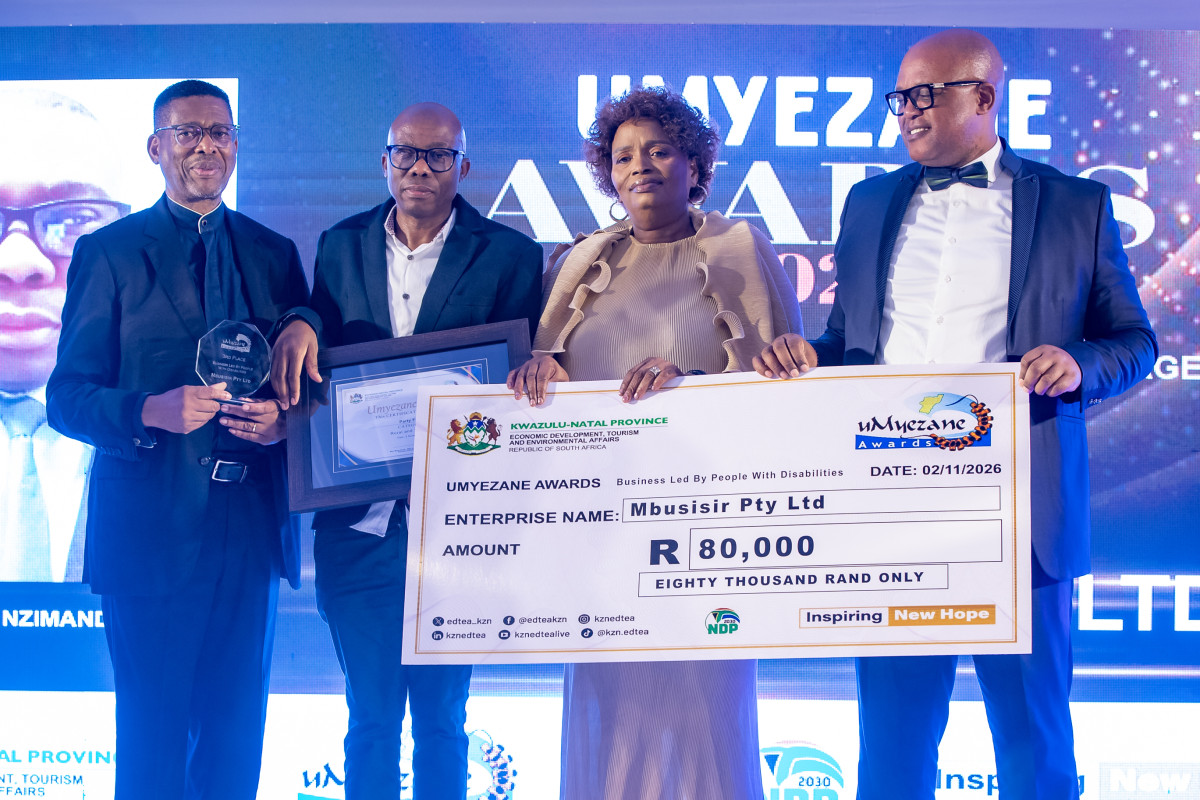
Eluthando Guesthouse took first place and R120,000 in the Business Led by People with Disabilities category. Manhlana Trading and Project came second with R100,000, and Mbusisir SA 01 (Pty) Ltd placed third with R80,000.
What are the Umyezane Awards?
The Umyezane Awards are EDTEA’s annual recognition of small, medium and micro enterprises (SMMEs) in KwaZulu-Natal. They honour entrepreneurs who show resilience, innovation and business excellence, across categories that include youth-owned, women-owned, rural and township businesses and emerging industrialists.
The awards run alongside a summit or indaba where government, business and entrepreneurs meet on the issues facing small enterprises. This year’s theme was business compliance. A category for companies owned by entrepreneurs with disabilities has been part of the programme since at least the 2025 edition, when Misokuhle Construction, owned by Nokwazi Manyoni, took the honour.
The 2026 ceremony was streamed live on the KZN Ezomnotho Updates YouTube channel.
The winners: Business Led by People with Disabilities
Eluthando Guesthouse is owned by its Director and Founder, Innocentia Thembisa Mthethwa, and has been open less than a year. It began trading on 27 February 2026 as a Black woman-owned and disability-owned tourism business in Ward 2, Khayelisha, Dukuduku. Its fully equipped one-bedroom self-catering unit has already hosted guests from Germany, France, the Netherlands, the USA and the UK. On 22 October 2026 it received a three-star grading from the Tourism Grading Council of South Africa. The next step is a 10-sleeper, disability-friendly facility, which now needs roofing and finishing.
Manhlana Trading and Project is a 100% Black women-owned company registered in 2019 and owned by Hloniphekile Masuku, a person with a disability. From its base in Umlazi it delivers landscaping, cleaning, construction, supply and agriculture across KwaZulu-Natal. It employs 25 people in painting, site preparation and plant supply, road construction, driving and administration. Its clients have included Silo Construction, SOLFAB Thermoplastic Engineering and Akwande Konke Logistics, and it painted the Umlazi Community Hall. A new agricultural project in Melmoth is set to add 10 jobs. The company aims for at least 30% of new hires to be persons with disabilities.
Mbusisir SA 01 (Pty) Ltd is a Pietermaritzburg civil engineering and construction company founded in 2017 by Mbusi Nzimande, a person with a disability who is its sole shareholder and director. It is 100% Black-owned, 100% disability-owned and a Level 1 B-BBEE contributor, with CIDB gradings of 2CE and 1GB. The company specialises in concrete works, road stabilisation and plant hire support on road and civil infrastructure projects across KwaZulu-Natal. Nzimande started it after seeing how few disability-owned firms won meaningful work in construction, despite preferential procurement targets. Its six contract workers are five young women and a young man with a disability, trained in project management, occupational health and safety, working at heights and chemical handling. Next, the company aims to expand its plant, take on larger packages of work and become a go-to partner for disability-inclusive subcontracting on public infrastructure.
Recognition by design
The disability category had its own stage moment, its own prize pool and named placings, so the winners were judged on their merit and celebrated in front of the province’s business community.
Simon Manda, Managing Editor of THISABILITY Newspaper, announced the category winners on stage. He told the audience it was an honour for the awards to recognise persons with disabilities, and reminded them of the saying that a society is measured by how it treats its most vulnerable.
“In 2010 we came to raise the platform for persons with disabilities, by telling the positive stories and dispelling the myths,” Manda said. “The United Nations say leave no one behind. This provincial government has included persons with disabilities, and for that we thank you.”
Speaking after the event, Manda added: “Rev. Musa Zondi and the EDTEA team did a sterling job on the evening.”
Disability and the economy: the numbers
South Africa has no published national count of disability-owned businesses. That gap is itself part of the story: what is not counted is hard to fund or buy from. The figures that do exist show how far persons with disabilities remain from full economic participation.
According to Census 2022, 6% of South Africans aged five and older live with a disability, down from 7.4% in 2011, with prevalence higher among women (7.0%) than men (4.9%) . Yet persons with disabilities made up only 1.3% of the formal workforce at designated employers in 2025, a share the Commission for Employment Equity says has stayed slightly above 1% for decades.
Government estimates that 2.4 to 3.5 million SMMEs operate in South Africa, but how many are owned by persons with disabilities is not recorded. Dedicated finance does exist: the Small Enterprise Finance Agency’s Amavulandlela Funding Scheme lends R50,000 to R15 million at prime less 5% to businesses at least 51% owned and actively run by a person with a disability.
Why it matters during Disability Rights Awareness Month
Disability Rights Awareness Month runs from 3 November to 3 December, closing on the International Day of Persons with Disabilities. Holding these awards on its eve moved the conversation from awareness to economic power.
Disability-led businesses can hire persons with disabilities, design for access and serve communities others overlook, and these winners are already doing so. Eluthando’s planned 10-sleeper facility will be built for guests with disabilities. Manhlana has set itself a target for disability inclusion in hiring. With the formal workforce stuck at about 1.3%, enterprise is one of the clearest routes into the economy.
Recognition only goes so far. Public and private buyers can now put these winners on their supplier lists, and funders can back the next stage of growth.