SADA Honoured Jace Nair, Ari Seirlis and Dr. Emile Gouws- People Who Refused to Wait for Permission

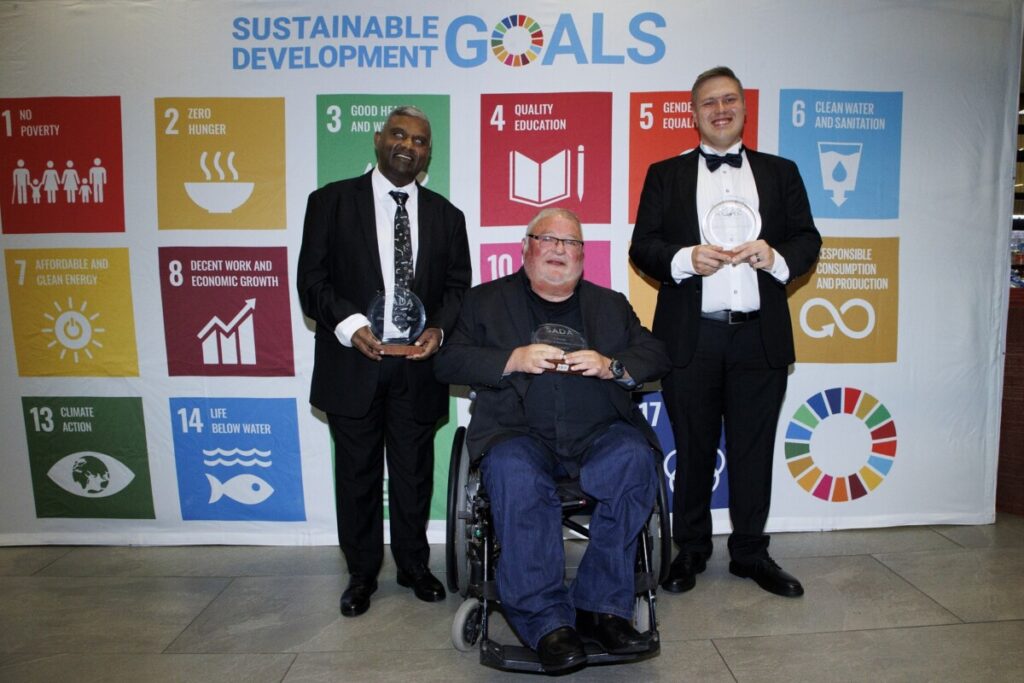
3 Honours awarded at the annual SADA Gala Dinner
There is a particular kind of South African who looks at a locked door and decides, quietly and without much fuss, that it is going to open. On 5 June 2026, the South African Disability Alliance (SADA) gathered to honour three of them. The evening was not really about trophies. It was about the long, patient, sometimes furious work of insisting that disabled people belong everywhere — in Parliament, in libraries, on aeroplanes, in animation studios, at the front of the room with a microphone in hand.
Ari Seirlis — Lifetime Disability Achievement Award
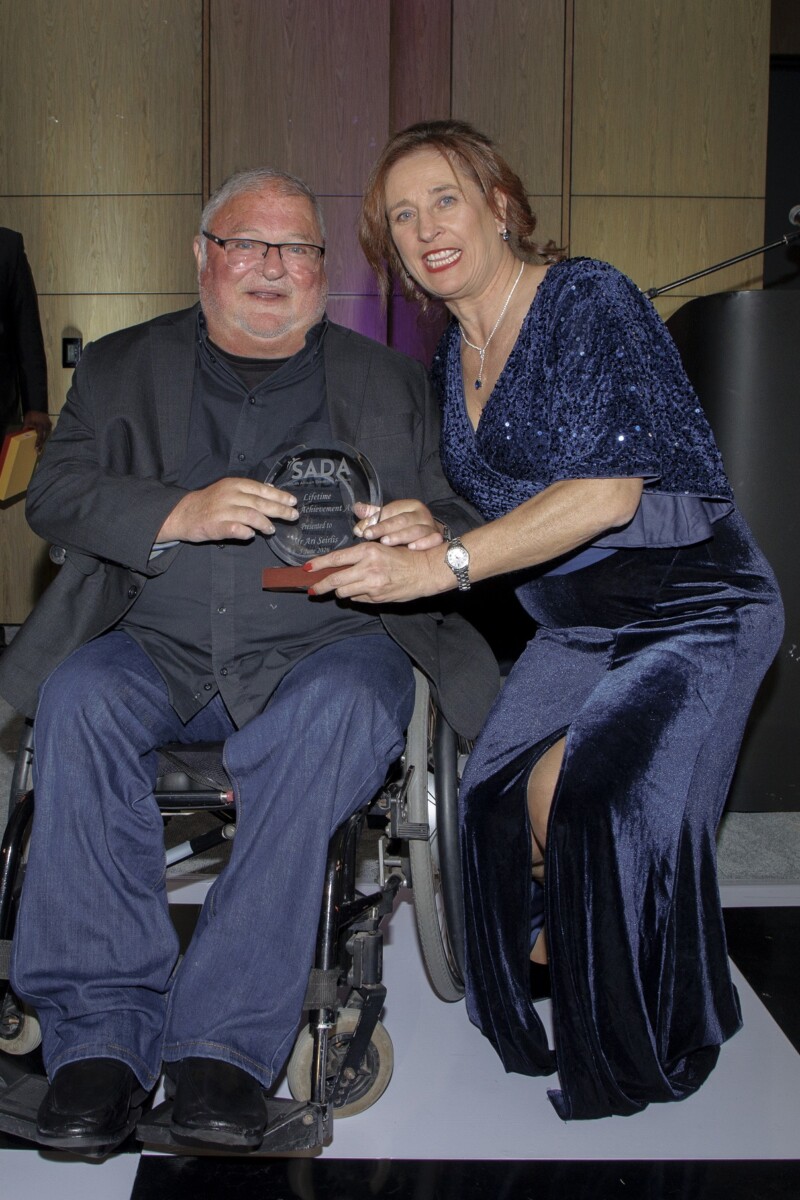
If you have ever wheeled a wheelchair onto a bus rapid transit platform in this country and found a ramp waiting for you, there is a decent chance Ari Seirlis had something to do with it. He led the QuadPara Association of South Africa as CEO for roughly two decades, and under him the organisation grew from a support network into one of the most respected NPOs in the sector.
Ari does not do polite lobbying alone. He was at the forefront of protests against the inaccessibility of stadiums for the 2010 FIFA World Cup, and the cover of his memoir captures his style perfectly: him leading other wheelchair users in the burning of an old wheelchair outside a SANRAL office, a protest staged to dramatise their opposition to road policy. That image — fire, defiance, a man who became quadriplegic at 23 after a diving accident — tells you everything about why his peers call him a force.

He has since set the story down in his own words. His self-published memoir, Wheels of Fire: A Story of Courage, Triumph over Adversity and Civil Action, is exactly what the title promises — part personal reckoning, part field manual for civil activism. While running QASA he travelled to hear the stories of people living with disabilities, from the poorest rural areas to engagements with presidents, and along the way crossed paths with figures like John McEnroe and Robin Williams. The book gathers those decades into something younger advocates can actually learn from.
What is easy to miss in the headlines is the quieter arithmetic of his life. More than four decades living with a spinal cord injury, navigating inaccessible environments and inequitable attitudes, while still finding the energy to mentor an entire generation. He continues to serve on the Presidential Working Group on Disability, turning lived frustration into policy pressure. His legacy is institutional, but it is also deeply personal — thousands of people who were told to expect less, and decided not to.
Jace Nair — Lifetime Disability Service Award
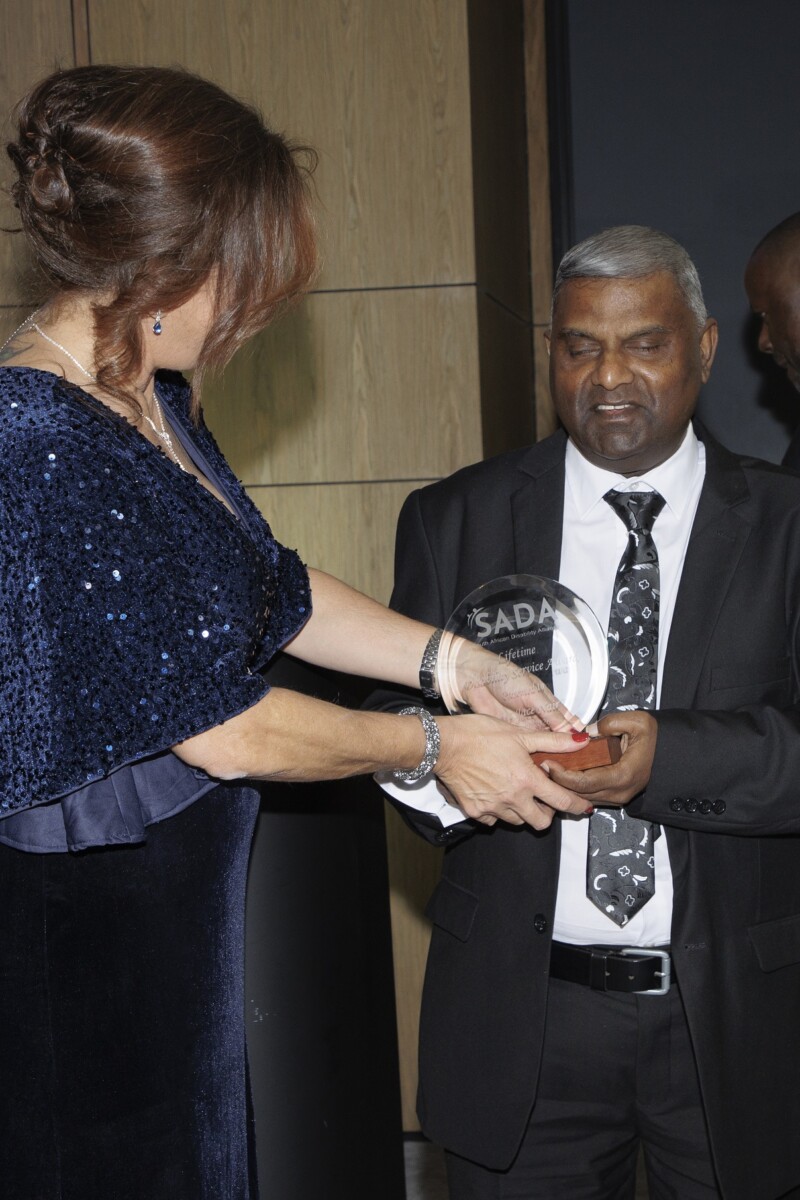
Imagine being legally forbidden from reading. Not by lack of money or schooling, but by copyright law itself. For blind and visually impaired South Africans, that was the reality under the apartheid-era Copyright Act of 1978 — and Jace Nair refused to accept it.
As CEO of Blind SA, Nair led the organisation’s Constitutional Court challenge to compel the President to act on copyright reform. The argument was simple and unanswerable: the old Act limited blind people’s rights to equality, dignity, education and freedom of expression, and blocked South Africa from joining the Marrakesh Treaty. The fight stretched across years and courtrooms. In its landmark May 2025 ruling, the Constitutional Court opened the door to accessible-format works and cleared the path for South Africa to ratify the Marrakesh Treaty. As Nair put it, it would let blind people access published work, improve their education, and deepen their participation in the economy — after twenty years of advocacy.
His phrase for it has always been borrowed from the movement’s own creed: nothing about us, without us. When the National Assembly finally passed the Copyright Amendment Bill, he welcomed Section 19D for ending the absurdity of it being a criminal offence to convert a book into Braille, large print or audio without a copyright holder’s consent. He has carried South Africa’s voice into Parliament, the World Intellectual Property Organization and beyond — and now retires having genuinely changed what blind South Africans are allowed to know.
Dr Emile Gouws — Rising Changemaker Award
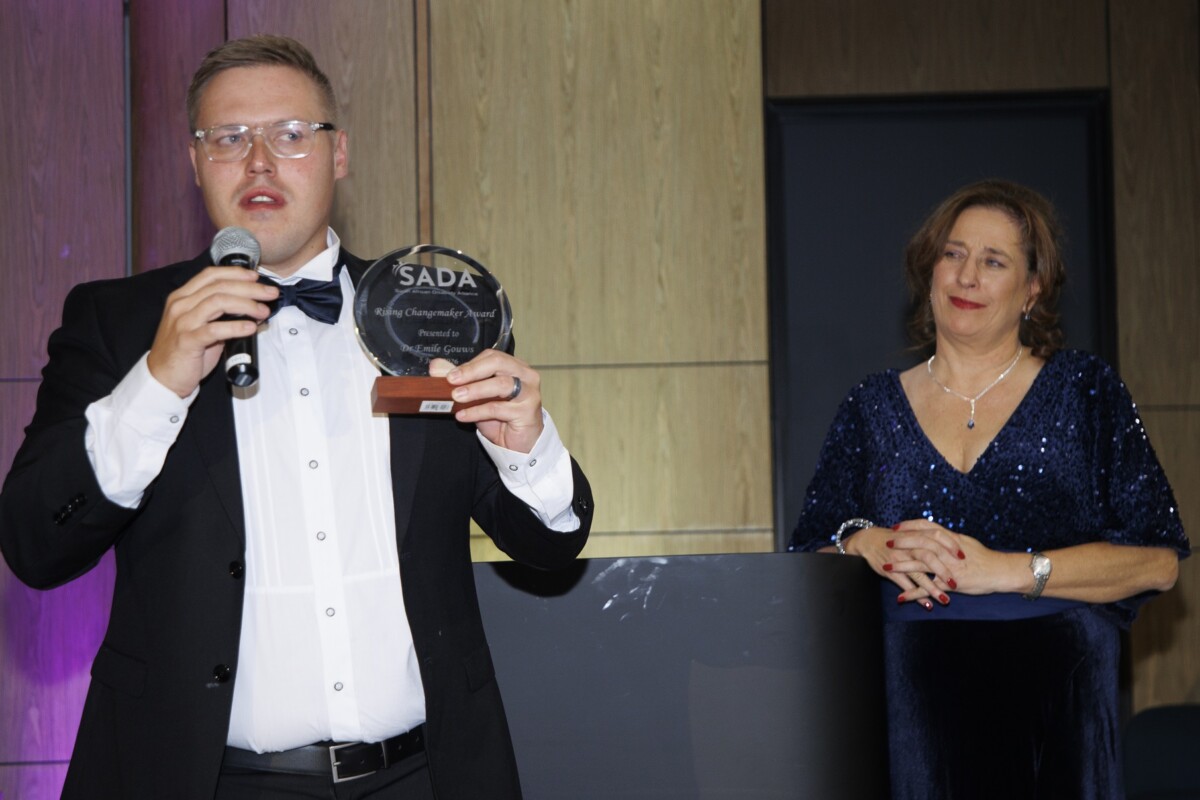
Some stories you cannot improve by embellishing. Emile Gouws was diagnosed autistic at three and was largely non-speaking until he was fifteen. He went on to earn a doctorate and become a postdoctoral fellow at the University of South Africa, securing a role with the Commonwealth Disabled People’s Forum and helping shape South Africa’s response to the UN on disability rights.
He does not treat that arc as a personal triumph to be displayed. He treats it as evidence. His journey from non-speaking to addressing international platforms, he says, shows what becomes possible when people are given time, support and the opportunity to develop in ways that respect who they are. Through the Commonwealth Disabled Peoples’ Forum he represents disabled people across 53 countries, and he is the first and only elected African member of the Autistic Researchers Committee of the International Society for Autism Research.
His advocacy refuses to stay locked in lecture halls. With retired advertising designer Derek Logan — a friend from their regular Friday lunch group — Gouws co-created an animated series called Unpacking George. Logan brings it to life through animation and voice acting, while Gouws draws on research, policy and his own lived experience to make autism awareness accessible to everyone. The show explores autism in everyday life from a relatable South African perspective, filling a real gap given how few local narratives about autism are easily accessible. Across its episodes, George helps viewers understand sensory sensitivities, communication differences, routine and emotional regulation — and how to make the reasonable accommodations that build a more inclusive space.
His work is also tender and practical. He is campaigning for the Sunflower Lanyard to be adopted at clinics, airports and supermarkets, and for a dedicated Ministry of Disability — pushing, always, for a country where neurodivergence is not merely tolerated but understood.