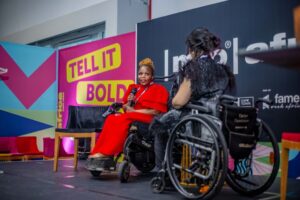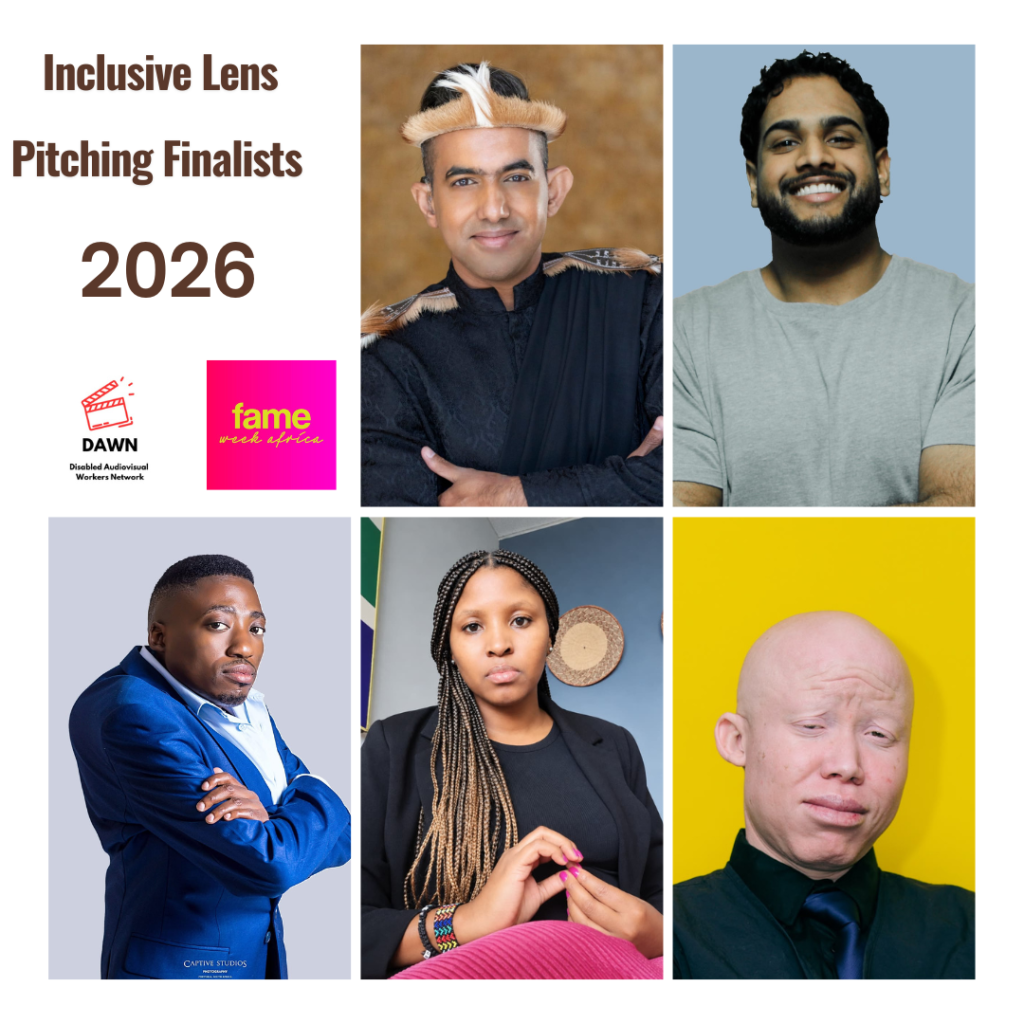
Inclusive Lens Pitching Finalists 2026

Five South African filmmakers with disabilities will pitch their original projects at FAME Week Africa 2026, competing for R50,000 in funding and professional development support.
Cape Town, 19 October 2026 – FAME Week Africa, in partnership with Disabled Audiovisual Network (DAWN) and the National Film and Video Foundation (NFVF), is proud to announce the five finalists selected for the inaugural Inclusive Lens Pitching Competition.
Created to address the barriers faced by filmmakers with disabilities in accessing opportunities, funding and industry networks, the competition represents an important step towards building a more inclusive and accessible African screen industry.
While the Inclusive Lens Awards recognise excellence in disability representation on screen, the Inclusive Lens Pitching Competition takes this commitment further by supporting the people creating stories behind the camera.
The competition welcomes original projects across film, television and digital storytelling, recognising that filmmakers with disabilities should have the opportunity to tell stories across every genre, whether or not those stories centre on disability.
MEET THE FIVE FINALISTS
The inaugural finalists represent an exciting range of genres, creative perspectives and original South African storytelling.
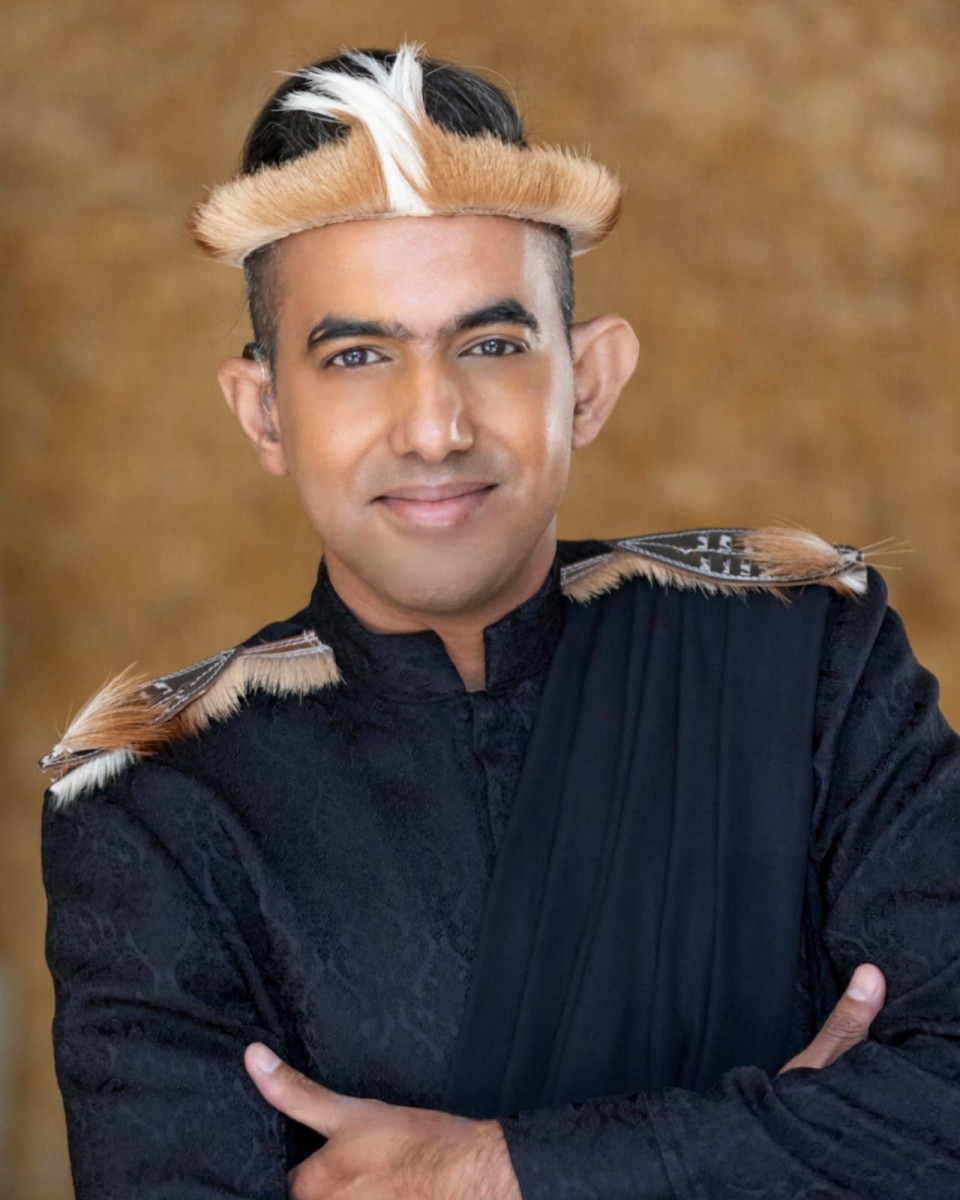
Adhil Ramnath – The Silent Witness (Psychological Thriller / Short Film)
A profoundly Deaf filmmaker, Adhil Ramnath brings his lived experience and passion for authentic Deaf representation to The Silent Witness. The film follows a Deaf graphic novelist who becomes entangled in a disturbing mystery when his fictional stories begin mirroring real crimes. Using South African Sign Language, visual observation and suspense, the project challenges conventional thriller storytelling and places a Deaf protagonist at the centre of the action.
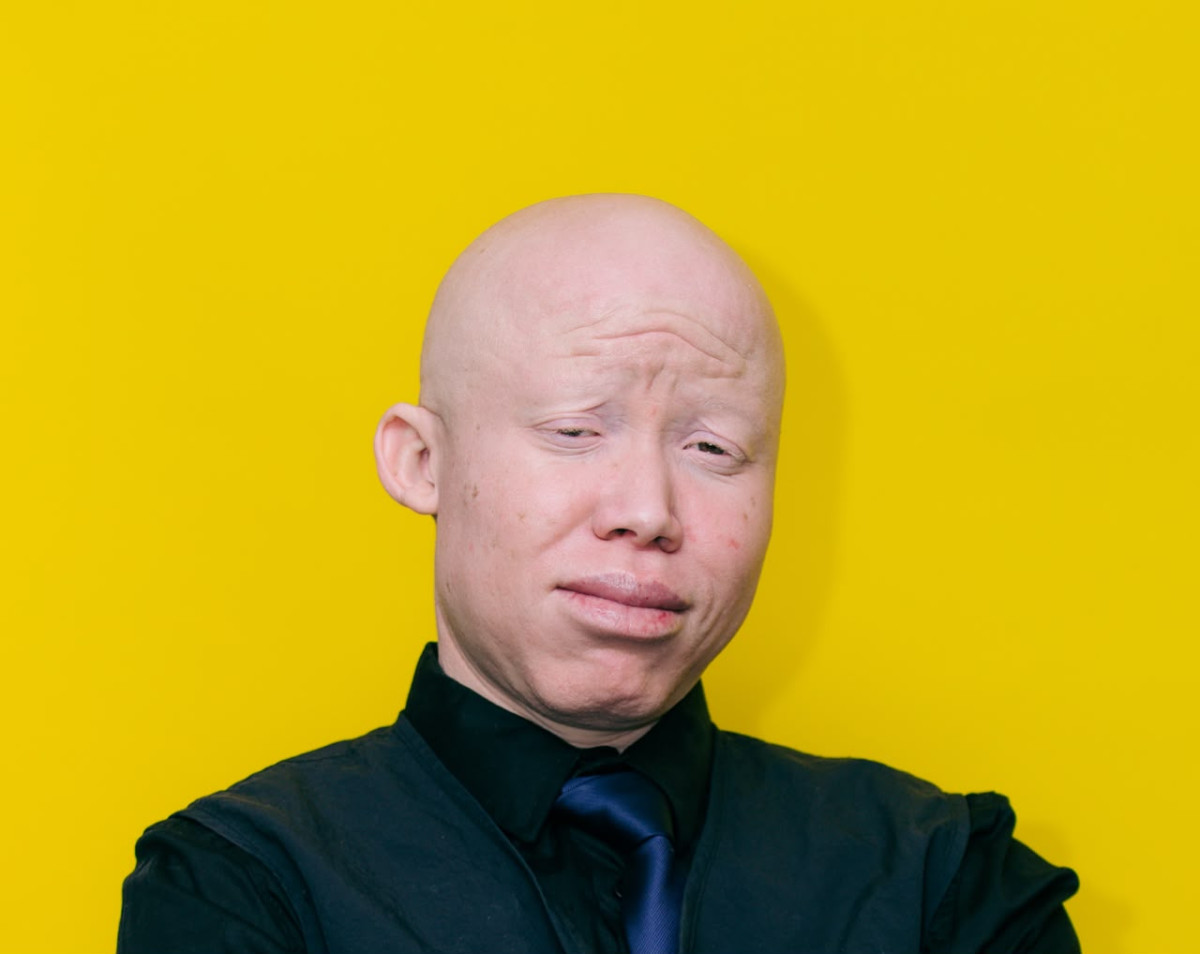
Tebatso Mashishi – Red Full Moon (Fantasy Drama / Television Series)
Award-winning actor, writer and director Tebatso Mashishi presents Red Full Moon, a fantasy drama set in a drought-stricken Tswana kingdom. When a young boy living with albinism is targeted for ritual sacrifice, a celebrated warrior defies his king to protect him. Drawing on Mashishi’s lived experience, the series challenges harmful myths and superstitions surrounding albinism while exploring courage, power and humanity.
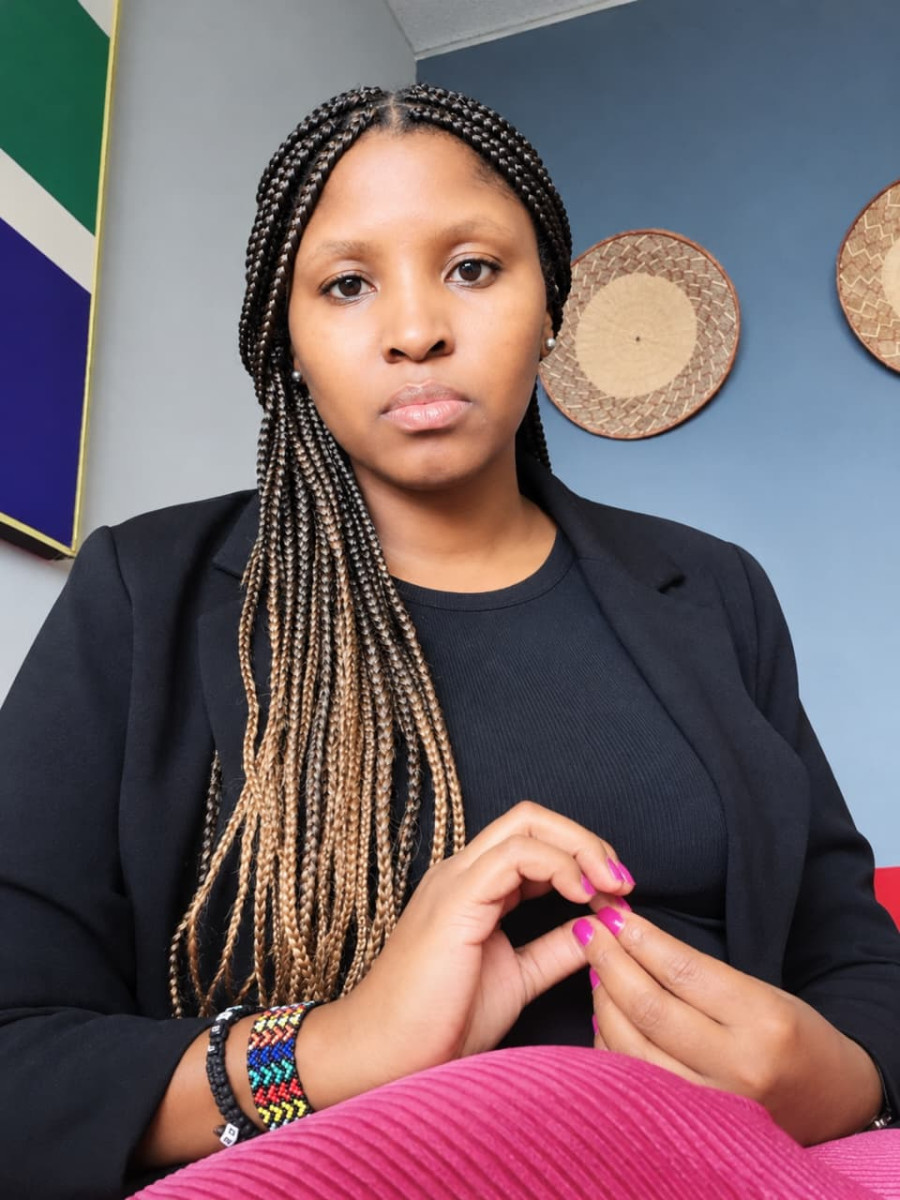
Samora Mbuyazi – The Empty Bedroom (Drama / Television Series)
Deaf writer and social auxiliary worker Samora Mbuyazi brings The Empty Bedroom, a powerful family drama exploring grief, communication and belonging. When a grieving Johannesburg couple takes in a homeless Deaf child, the family must confront the emotional and linguistic barriers that divide them. Drawing on Mbuyazi’s extensive experience working with Deaf children and families, the series places South African Sign Language at the heart of its storytelling.

Veron Vadivelu – Original Violence (Coming-of-Age Crime Drama / Feature Film)
Cape Town-based filmmaker and founder of Vili Studios, Veron Vadivelu, presents Original Violence, a coming-of-age crime drama set in Chatsworth, Durban. The film follows two childhood friends whose ambitions for a better future are threatened when they become entangled in organised crime. Through the project, Vadivelu seeks to challenge stereotypes and bring contemporary South African Indian experiences to the screen.

Calvin Ratladi – The Bending Tree (Psychological Horror / Feature Film)
Award-winning multidisciplinary artist Calvin Ratladi presents The Bending Tree, a supernatural psychological horror exploring grief, ancestral memory and land dispossession. The story follows an archaeologist living with kyphoscoliosis who returns to his ancestral land in Limpopo with his young son, only to uncover a terrifying history. The project places a complex disabled African protagonist at the centre of an ambitious genre film.
CREATING OPPORTUNITIES BEYOND THE INCLUSIVE LENS PITCH
The five finalists will present their projects to a panel of industry professionals at FAME Week Africa on Wednesday, 28 October 2026, at 15:30 at the Cape Town International Convention Centre (CTICC 2).
To support their preparation, finalists will receive individual online pitch coaching from Berdene Burger of Meerfout Films, helping them strengthen their presentations, communicate their creative vision and prepare for questions from the judging panel.
Accessibility remains central to the competition, with provision for South African Sign Language interpretation and appropriate adjustments to ensure finalists can participate meaningfully.
The judging panel will include Andrina Moodley of Story Oasis, Thierry Cassuto of Both Worlds and Louise Callott-Stevens of EarCandy.
The selected recipient will receive:
- R50,000 in financial support from the National Film and Video Foundation.
- Story development consultation from Story Oasis.
- Production consultation from Both Worlds.
The recipient will be announced at the Inclusive Lens Awards ceremony on Thursday, 29 October 2026, as part of FAME Week Africa.
BUILDING AN INDUSTRY WHERE EVERYONE CAN TELL THEIR STORY
“At FAME Week Africa, we’ve always believed that authentic representation needs to extend beyond what audiences see on screen. We need to create opportunities for filmmakers with disabilities to develop, produce and own their stories,” says Martin Hiller, Portfolio Director of FAME Week Africa.
The inaugural competition reflects the importance of collaboration between industry organisations, creative development partners and funding bodies in addressing longstanding inequalities within the screen sector.
“For too long, filmmakers with disabilities have faced barriers not because of a lack of talent or ideas, but because the industry has not always created the space or opportunities for them to participate fully,” says Karen Jeynes, Founder of DAWN