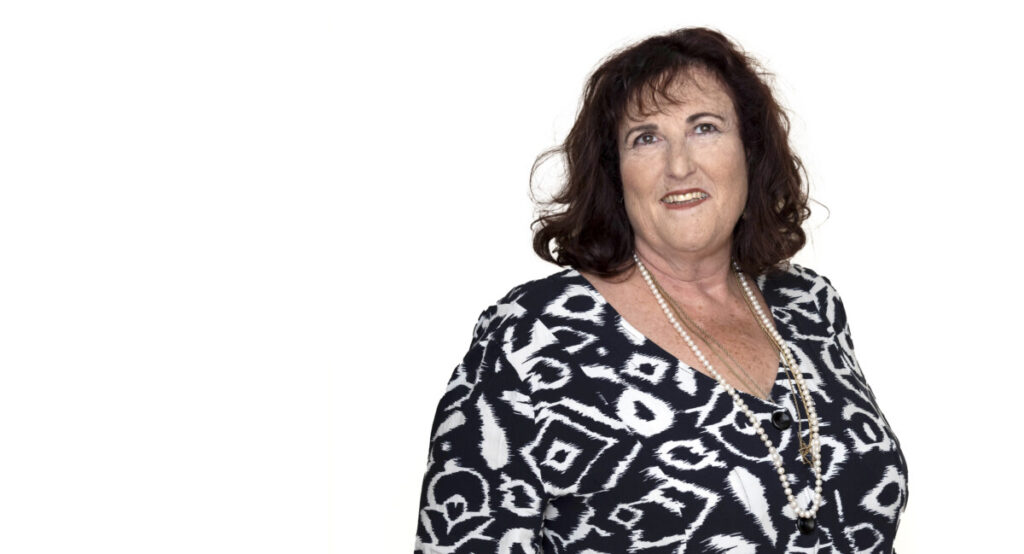
Susan Abro

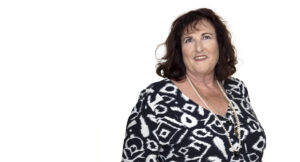
As World Retina Week takes place from 21 to 27 September, Durban family lawyer Susan Abro is sharing her deeply personal experience of living with retinitis pigmentosa, while calling for greater understanding of what it really means to live with progressive vision loss.
Retinitis pigmentosa (RP) is a group of inherited retinal conditions that progressively damage the retina and can lead to severe vision loss or blindness. Alongside conditions such as macular degeneration, Usher syndrome and diabetic retinopathy, retinal diseases affect millions of people worldwide.
For Susan, however, retinitis pigmentosa is not simply a medical diagnosis. It is something that has shaped her life, her career and her understanding of independence.

Diagnosed with RP in 2009, Susan continued to build her career as a family lawyer and eventually stopped driving in 2016 as her vision deteriorated. Today, despite significant vision loss, she continues to run her legal practice and uses technology, including artificial intelligence, to help her work effectively.
Technology has become an important part of how Susan continues to work. She uses AI to record and summarise meetings, with the resulting summaries also proving useful to her clients.
Her experience has also given her a very different perspective on the assumptions people make about blindness and employment.
“People don’t want to employ blind people. They think blind people need too much help. But what they don’t understand is that blind people generally have to fend for themselves and are more than capable,” she says.
“And nowadays, with technology, the advances are amazing.”
A family journey with retinitis pigmentosa
Susan’s story is also closely intertwined with that of her brother, Jonathan, who was diagnosed with RP in his mid-twenties.
Like Susan, Jonathan’s gene has been identified. His journey, however, has taken a different path.
As his vision deteriorated, Jonathan eventually became completely blind. He had previously worked at a senior level, running major projects for international banks, but found that employment opportunities became increasingly difficult as his sight declined.
Today, he dedicates much of his time to charity work, teaching others how to live independently with blindness and testing emerging technologies designed to make life more accessible.
His work has included testing assistive devices such as an AI-enabled cane, as well as technology that can use sound to help people with visual impairments locate objects and follow movement. He has even tested technology at Wimbledon designed to help users identify where a tennis ball is travelling through sound.
For Jonathan, independence is about much more than simply managing without assistance. One of the first pieces of advice he received while losing his vision was to learn to touch type, a skill he says has enabled him to type faster than he did when he could see.
He also stresses the importance of learning to use the accessibility functions built into smartphones and other devices. “Being able to use VoiceOver or TalkBack screen reader empowers me to communicate, travel, shop or anything else we all do with our smartphones,” he explains.
But perhaps most importantly, he says, independence also means knowing when to ask for help. “Independence is not just about being able to do as much as possible for yourself. It is also about knowing when you need help with something and choosing or being willing to ask for that help.”
Inclusion should include everyone
For Susan and Jonathan, the challenges associated with vision loss extend far beyond the condition itself.
One issue Susan is particularly passionate about is access to disabled parking. She believes that people with severe visual impairments should not be excluded from accessible parking facilities, which are often essential for safely entering and exiting vehicles, particularly for people who rely on guide dogs or sighted assistance.
This is a concern shared by Retina South Africa. Mariza Jurgens, Vice Chairperson of Retina South Africa, says accessible parking needs to be approached from an inclusive perspective that recognises the different needs of people living with disabilities.
“People with severe visual impairments, and other forms of disabilities affecting mobility, need access to wider accessible parking bays,” says Jurgens. “For someone who is blind, a standard parking bay can make it difficult and potentially dangerous to exit a vehicle safely, particularly when there is little space between parked cars. This is especially important for guide dog users and people who rely on sighted guides.”
Retina South Africa has called for an increase in properly sized accessible parking bays so that people living with different disabilities are not placed in competition with one another.
Jurgens says the issue is ultimately about safety, dignity and inclusion. “We are not asking for wheelchair users to lose access. We are calling for a truly inclusive approach that recognises the safety needs of all persons with disabilities.”
Early detection and research remain critical
While Susan and Jonathan’s experiences highlight the realities of living with progressive vision loss, World Retina Week also provides an opportunity to remind people that awareness, early detection and research matter.
Retinal conditions can have very different causes, symptoms and treatment options. Some inherited retinal diseases currently have no cure, but research into gene therapies, pharmaceutical interventions, artificial retinas, stem-cell approaches and other emerging treatments is continuing.
The World Health Organisation estimates that at least 2.2 billion people globally live with near or distance vision impairment, with at least 1 billion cases being preventable or yet to be addressed.
For Susan, raising awareness is therefore about much more than understanding a disease. It is about challenging perceptions and changing the way society views what people with vision loss can achieve.
Her journey is a reminder that while losing vision can fundamentally change the way someone navigates the world, it does not diminish their intelligence, ambition, skills or ability to make a meaningful contribution.
This World Retina Week, Susan hopes that greater awareness will encourage people to look beyond disability and help create a truly inclusive society where people with disabilities are treated with dignity, respect and inclusion.
“Vision loss may change how you see the world, but it does not define who you are or what you are capable of. See the person, not the disability.”